

Dr. Tom’s Top Shoe Picks
Medically reviewed by Dr. Tom Biernacki, DPM
Board-certified podiatric surgeon | Balance Foot & Ankle
Last reviewed: May 2026
Dr. Tom’s Top 10 Shoes (2026)
Tested, recommended, and prescribed to my patients. Each pick includes pros, cons, and the specific use case I prescribe it for.
Affiliate disclosure: As an Amazon Associate, Balance Foot & Ankle earns from qualifying purchases.
Need a personalized recommendation? Schedule a fitting at our Howell or Bloomfield Township office. Call (810) 206-1402.
Medically reviewed by Dr. Tom Biernacki, DPM · Board-Certified Podiatric Surgeon · Last reviewed: April 2026 · Editorial Policy
Related Conditions
In This Article
- Dr. Tom’s Top Shoe Picks
- Dr. Tom’s Top 10 Shoes (2026)
- ASICS Lineup — Clinical Breakdown
- Hoka’s Advantages Over ASICS
- ASICS’ Advantages Over Hoka
- Dr. Tom’s Verdict by Condition
- Related Articles
- Your Board-Certified Podiatrists
- Shoes as Treatment: What They Can and Cannot Do
- Dr. Tom’s Recommended Shoes
ASICS vs Hoka: Podiatrist Verdict — DuoMax Stability vs Rocker Cushion
ASICS vs Hoka — two very different engineering approaches to the same problem: protecting feet during high-impact activity. ASICS built their reputation on biomechanical precision; Hoka built theirs on maximum cushion. Here’s how they compare clinically.
Quick answer: Hoka wins for heel pain, recovery, and maximum cushion. ASICS wins for stability technology (DuoMax), structured support, and overpronation control in performance runners. For everyday clinical use, it depends heavily on your gait pattern.
| Feature | ASICS | Hoka |
|---|---|---|
| Stability Tech | DuoMax dual-density medial post | J-Frame (Gaviota/Arahi only) |
| Cushion System | Gel + FF Blast/FF Blast+ | Full-compression EVA |
| Stack Height | 22–30mm (moderate) | 33–39mm (extreme) |
| Rocker Geometry | Minimal | Yes — Meta-Rocker |
| Width Options | B, D, 2E (most models) | B, D (standard only) |
| Orthotic Space | Good (removable insole) | Poor (thick molded insole) |
| Price Range | $130–$180 | $140–$175 |
| Best For | Stability running, overpronation | Cushion, recovery, heel pain |
ASICS Lineup — Clinical Breakdown
ASICS Gel-Kayano 32 — Top Stability
The Kayano is ASICS’ flagship stability shoe. DuoMax dual-density midsole (firmer medial side, softer lateral) combined with a reinforced heel counter creates one of the most mechanically precise stability platforms in running. FF Blast+ midsole provides cushion without the extreme height that makes Hoka orthotic-incompatible. My top ASICS prescription for moderate-to-severe overpronators who run regularly.
The current Kayano is the Gel-Kayano 32. For its published stack, drop, weight and width options, plus a podiatrist’s read on which feet it suits, see the ASICS Gel-Kayano 32 review on Podiatrist Tested, Dr. Tom’s shoe-review site. Hoka’s closest stability counterpart gets the same treatment in the Hoka Gaviota 6 review.
ASICS Gel-Nimbus 28 — Premium Neutral
The Nimbus is ASICS’ answer to the Hoka Bondi — high-cushion neutral trainer. FF Blast+ foam, a measured heel stack just under 40mm, Gel technology in heel and forefoot. That puts it within a millimetre of the Bondi 9 — the Nimbus matches Hoka on cushion without the rocker. Clinically excellent for neutral runners who want maximum cushion. Width options (including 2E) give it an advantage over Hoka for wider feet.
ASICS Gel-Cumulus 28 — Versatile Neutral
The Cumulus sits between the Nimbus (premium) and the Kayano (stability) as a versatile everyday trainer. Good orthotic accommodation, available in 2E, reliable durability. For patients who need a clinical-quality daily trainer without the premium price of the Nimbus, this is my go-to ASICS recommendation.
Hoka’s Advantages Over ASICS
Where Hoka clinically outperforms ASICS:
- Rocker geometry: Hoka’s Meta-Rocker reduces plantar fascia and Achilles load at toe-off — ASICS has no equivalent design feature
- Heel bevel: Flared heel reduces impact transient — beneficial for heel spur and Achilles patients
- Recovery use: Hoka Ora Recovery slides and Bondi are better post-workout and post-surgery recovery options than anything in ASICS’ lineup
- Comfort immediacy: Hoka’s cushion is immediately noticeable; ASICS’ Gel + FF Blast requires more break-in
ASICS’ Advantages Over Hoka
- DuoMax stability: ASICS’ dual-density medial post is more sophisticated and durable than Hoka’s J-Frame for controlling severe overpronation
- Width options: ASICS offers 2E in most running models; Hoka rarely offers wider than standard
- Orthotic compatibility: ASICS’ removable insoles leave better space for custom orthotics
- Performance running: ASICS Metaspeed and Superblast lines are elite racing tools; Hoka’s racing line (Carbon X) is less competitive at top-end
Dr. Tom’s Verdict by Condition
| Condition | Winner | Recommendation |
|---|---|---|
| Plantar Fasciitis | Hoka | Bondi 9 — rocker + heel cushion |
| Overpronation (moderate-severe) | ASICS | Gel-Kayano 32 |
| Overpronation (mild) | Either | ASICS Gel-Kayano or Hoka Gaviota |
| High Arches / Supination | Either | ASICS Nimbus or Hoka Clifton |
| Wide Feet | ASICS | Nimbus 27 or Cumulus 27 in 2E |
| Post-Surgical Recovery | Hoka | Bondi 9 or Ora slides |
| Custom Orthotics | ASICS | Better insole removal for orthotic space |
| Performance Running | ASICS | Metaspeed Sky / Superblast |
| Standing All Day | Hoka | Bondi 9 rocker reduces fatigue |
Visit Balance Foot & Ankle — Same-Day Appointments Available
Our podiatry team serves patients throughout Michigan including Howell, Brighton, and Bloomfield Township. If you’re dealing with heel pain, ingrown toenails, or a foot injury, we have same-day appointment availability.
ASICS or Hoka for plantar fasciitis?
Hoka Bondi 9. The Meta-Rocker reduces plantar fascia loading during the push-off phase of gait in a way ASICS cannot match. For plantar fasciitis patients who also overpronate significantly, I sometimes use ASICS Kayano with a custom orthotic as an alternative, but Hoka is the first-line recommendation for pure plantar fasciitis.
Are ASICS or Hoka better for running?
Depends on distance and goal. For everyday training runs, both are excellent — Hoka Clifton for cushion-focused runners, ASICS Cumulus for those who prefer a more traditional ride. For performance and racing, ASICS’ Metaspeed and Superblast lines compete at a higher level than Hoka’s current racing offerings.
Do podiatrists recommend ASICS?
Yes — the Kayano and Nimbus are among the most commonly prescribed running shoes in podiatry. ASICS’ clinical heritage (they sponsor biomechanics research and partner with podiatric organizations) means their stability technology is evidence-based and podiatrist-trusted.
Can I use custom orthotics in Hoka vs ASICS?
ASICS is significantly better for custom orthotic use. The insoles remove cleanly and leave adequate depth for most orthotic profiles. Hoka’s thick, curved insoles are difficult to replace and the high stack creates instability with an additional insert. If you wear custom orthotics, choose ASICS over Hoka.
Related Articles
📖 ASICS vs Brooks: Stability Showdown
📖 On Cloud vs Hoka: Podiatrist Verdict
📖 Hoka Bondi vs Clifton Compared
📖 Best Shoes for Knee Pain
ASICS vs Hoka — Get the Right Answer for Your Gait
Dr. Tom Biernacki performs in-office gait analysis to determine whether you need ASICS’ structured stability or Hoka’s cushioned rocker — and exactly which model fits your foot type.
📞 (810) 206-1402 | Balance Foot & Ankle Specialists
📋 Dr. Tom Also Recommends
Podiatrist Recommended Orthotics 2026: Dr. Tom’s Top 10 Insoles & Arch Supports
A podiatrist’s complete clinical guide to the best insoles — custom orthotics, OTC picks, and what actually works for plantar fasciitis, flat feet, neuropathy & more.
Written by Dr. Tom Biernacki, DPM — Board-certified podiatrist at Balance Foot & Ankle Specialists. Dr. Biernacki prescribes both ASICS and Hoka footwear based on individual gait analysis, foot structure, and clinical diagnosis.
Related Treatment Guides
- Plantar Fasciitis & Heel Pain Treatment
- Custom 3D Orthotics
- Sports Foot & Ankle Injury Treatment
- Bunion Treatment
Michigan patients experiencing foot or ankle problems can schedule an appointment at Balance Foot & Ankle — with locations in Howell (4330 E Grand River) and Bloomfield Township (43494 Woodward Ave #208). Call (810) 206-1402 for same-week availability.
Insurance Accepted
BCBS · Medicare · Aetna · Cigna · United Healthcare · HAP · Priority Health · Humana · View All →
Howell Office
4330 E Grand River Ave
Howell, MI 48843
Get Directions →
Bloomfield Township Office
43494 Woodward Ave, #208
Bloomfield Township, MI 48302
Get Directions →
Your Board-Certified Podiatrists



Ready to Get Back on Your Feet?
Same-week appointments available at both locations.
👟 Dr. Tom’s Complete Footwear Library
Podiatrist-Approved Guides for Every Foot Type & Condition
Clinically reviewed by Dr. Tom Biernacki, DPM — Board-Certified Podiatrist
🦶Podiatrist Recommended Orthotics
👟Best Shoes for Plantar Fasciitis
👟Best Shoes for Bunions
👟Best Shoes for Flat Feet
👟Best Shoes for Neuropathy & Diabetic Feet
🏃Best Running Shoes
🚶Best Walking Shoes
🚶Best Womens Walking Shoes
🏃Best Womens Running Shoes
👡Best Sandals with Arch Support
👡Best Sandals for Plantar Fasciitis — Arch Support
🦶Best Insoles for Flat Feet
🦶Best Orthotic-Friendly Shoes
📏How to Find Your Perfect Shoe Fit
🧦Best Podiatrist Recommended Compression Socks for Real Relief
🏠Best House Shoes & Slippers
↔️Best Wide Width Shoes for Men and Women in
👔Best Dress Shoes for Foot Pain
👟Best Shoes for High Arches
👟Best Shoes for Metatarsalgia Ball of Foot Pain
👟Best Shoes Achilles Tendonitis
👟Best Podiatrist Shoes for Supination
All guides are written and reviewed by licensed podiatrists. Schedule an appointment →
Shoes as Treatment: What They Can and Cannot Do
Advantages
- ✓ Right shoe = pain reduction
- ✓ Multiple price points
- ✓ Fast adjustment
Considerations
- ✗ Trial-and-error
- ✗ Replace every 400 miles
- ✗ Custom orthotics often needed
Dr. Tom’s Recommended Shoes
Affiliate disclosure: As an Amazon Associate, Balance Foot & Ankle earns from qualifying purchases. We only recommend products we use with patients.
Brooks Ghost 17 Dr. Tom’s Pick
Best for: Neutral runner
Check Price on Amazon
Brooks Adrenaline GTS 23 Dr. Tom’s Pick
Best for: Stability for flat feet
Check Price on Amazon
Altra Torin 8 Dr. Tom’s Pick
Best for: Zero-drop wide toe box
Check Price on Amazon
Ready to Get Back on Your Feet?
Same-day appointments in Howell + Bloomfield Township. Most insurance accepted. Dr. Tom Biernacki, DPM & team.
Book Today — Same-Day Appointments Available
Call Now: (810) 206-1402
About Your Care Team at Balance Foot & Ankle
Dr. Tom Biernacki, DPM · Board-Certified Foot & Ankle Surgeon. Specializes in conservative-first care, minimally invasive bunion surgery, and complex reconstruction.
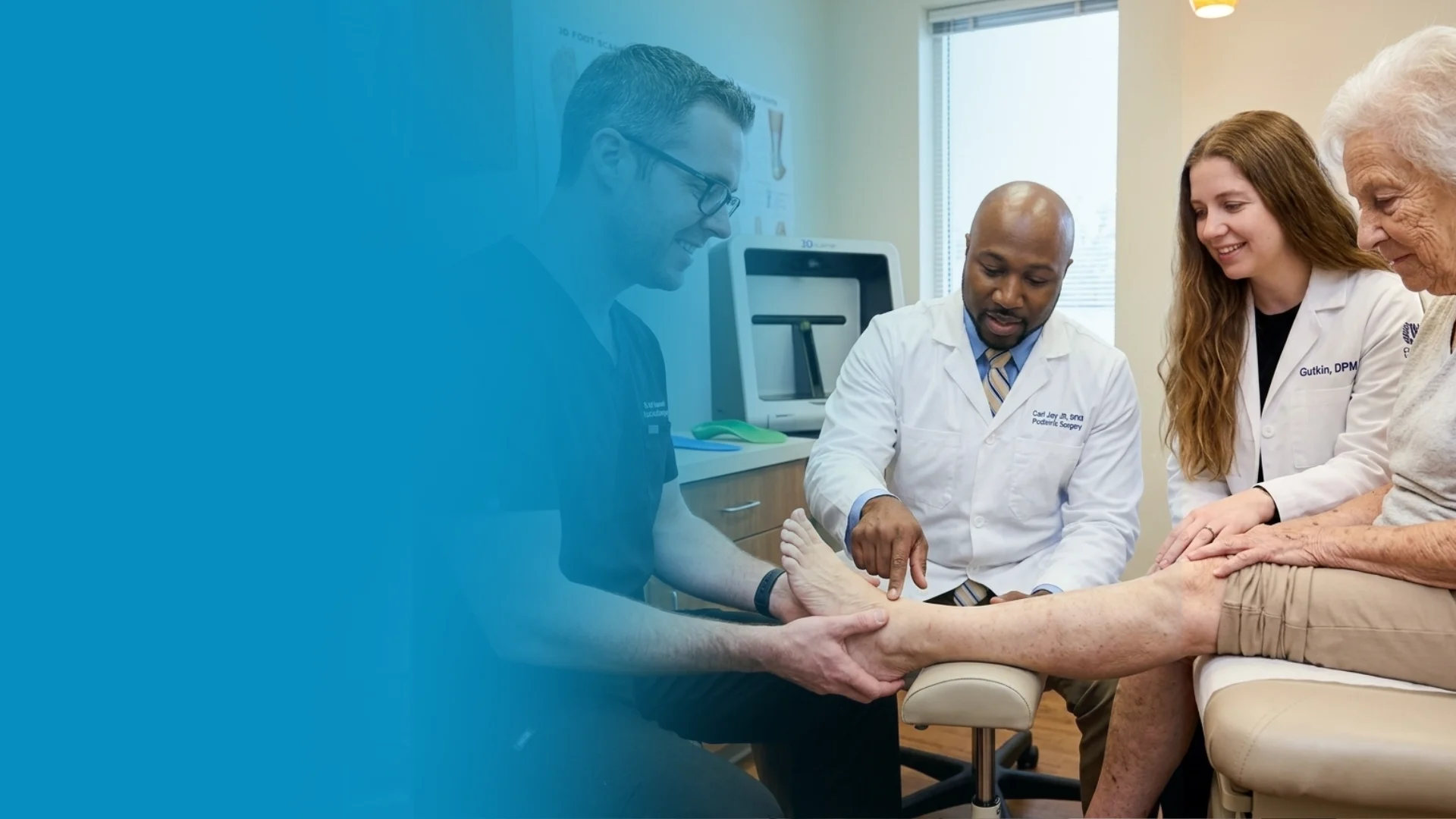
Dr. Carl Jay, DPM · Accepting new patients. Specializes in sports medicine, athletic injuries, and routine podiatric care.
Dr. Daria Gutkin, DPM, AACFAS · Accepting new patients. Specializes in surgical reconstruction and pediatric podiatry.
Locations: 4330 E Grand River Ave, Howell, MI 48843 · 43494 Woodward Ave Suite 208, Bloomfield Township, MI 48302
Hours: Mon–Fri 8:00 AM – 5:00 PM · (810) 206-1402
Podiatrist-Recommended Products to Pair With Your Running Shoes
- CURREX RunPro — biomechanically calibrated insole that maximizes performance in either ASICS or HOKA
- DASS Medical Compression Socks — graduated compression socks that improve recovery and circulation between runs
- Doctor Hoy’s Natural Pain Relief Gel — compact topical relief for post-run soreness regardless of shoe brand
These are the same products Dr. Biernacki recommends in clinic. Available through our partner Foundation Wellness.
Related Care at Balance Foot & Ankle
Clinical foot and ankle services at our Howell and Bloomfield Township offices.
Get Expert Care at Balance Foot & Ankle
Same-week appointments at our Howell and Bloomfield Township offices. Board-certified podiatric surgeons. Most insurance accepted.
Ready to Get Relief?
Same-day appointments available in Howell & Bloomfield Township, MI
4.9★ | 1,123 Reviews | 3,000+ Surgeries
Or call: (810) 206-1402
Podiatrist Pairing — Best Insole for This Shoe Category
Regardless of which shoe you pick, the insole inside it determines half of the foot-pain outcome. Both ASICS GEL-Kayano and HOKA Bondi accept aftermarket insoles after removing the stock one. Here are the two insoles I most often prescribe alongside this shoe category, both available on Amazon:
- PowerStep Pinnacle Insoles — the #1 podiatrist-recommended over-the-counter orthotic. Full-length with built-in arch support and a deep heel cradle. Fits inside most running shoes after removing the stock insole.
- Currex RunPro Insoles — runner-specific insole engineered for shock absorption and dynamic support during gait. Three arch profiles (low / med / high) so it matches your actual foot.
Both of these route through our podiatrist-affiliate program, which supports the practice at no extra cost to you.

Dr. Tom Biernacki, DPM is a board-certified foot & ankle surgeon (ABFAS & ABPM) at Balance Foot & Ankle Specialists in Southeast Michigan. With over a decade of clinical experience, he specializes in heel pain, bunions, diabetic foot care, sports injuries, and minimally invasive surgery. Dr. Biernacki is a member of the APMA and ACFAS, and his patient education content on MichiganFootDoctors.com and YouTube has made him one of the most-followed foot & ankle educators on YouTube.
More questions patients ask
Are ASICS or Hoka better for foot health?
Both are top podiatrist recommendations for different strengths. Hoka excels with maximum cushioning and meta-rocker geometry for plantar fasciitis and heel pain. ASICS excels with gel-based cushioning and a comprehensive stability range. Balance Foot & Ankle recommends both regularly for different patient profiles.
Which is better for heel pain — ASICS or Hoka?
Both are excellent for heel pain. Hoka Bondi's rocker geometry reduces plantar fascia stress during gait, and its maximal stack absorbs impact. ASICS Gel-Nimbus specifically targets heel impact absorption through large gel units. Many patients at Balance Foot & Ankle report equal success with either brand.
Are ASICS or Hoka better for overpronation?
ASICS has a stronger stability lineup with Dynamic DuoMax technology (GT-2000, Kayano) and medial post designs with more clinical history. Hoka offers J-Frame stability in Arahi and Gaviota. For established overpronation management, ASICS has a slight edge in options; Hoka wins for cushioning in stability shoes.
Which brand is more comfortable for all-day wear — ASICS or Hoka?
Hoka's maximum cushioning makes it particularly comfortable for all-day wear, especially on hard floors. Many healthcare workers prefer Hoka Bondi SR for shift work. ASICS is more comfortable for running-specific activities. For occupational all-day comfort, Hoka typically leads.
What's the podiatrist verdict on ASICS vs. Hoka?
Balance Foot & Ankle regards both as excellent brands. Hoka for maximum cushioning and plantar fasciitis management; ASICS for gel-based stability and neutral options. The right brand depends on your conditions and activities. Call (810) 206-1402 for personalized guidance.
Still have a question about coverage or cost? Book online and we will check your benefits before your visit: Book in Howell · Book in Bloomfield Township. Prefer to talk it through first? Call (810) 206-1402.