Expert Foot & Ankle Treatment from Michigan’s #1 Podiatrist - Balance Foot & Ankle Specialist
As Seen on YouTube
Trusted by 1M+ Social Media Followers
Expert Foot & Ankle Treatment from Michigan’s #1 Podiatrist - Balance Foot & Ankle Specialist
Trusted by 1M+ Social Media Followers
What to Expect After Achilles Bone Spur Surgery
We go over how to get rid of black toenail fungus & cure black fungus under the toenails. We also review black nail lines vs. melanoma!
Wearing nail polish regularly may leave your toenails looking yellow, stained, or discolored. While often harmless and cosmetic, this can sometimes signal deeper nail health issues like fungal infections, dehydration, or lack of oxygen. Understanding the cause of the discoloration is key to restoring healthy, natural-looking nails.
Discolored toenails from nail polish are commonly caused by dark-colored pigments seeping into the porous nail plate, especially if a base coat wasn’t applied. Over time, this can leave behind yellow, brown, or cloudy stains. However, discoloration that doesn’t fade or comes with changes like thickening, odor, or crumbling could indicate a fungal infection or nail trauma. Giving your nails a break from polish and using gentle nail treatments can help—but persistent issues should be evaluated by a podiatrist.
Toenail Pain (Toenail Fungus, Ingrown Toenails, Discolored Toenails)
If your discolored toenails aren’t improving or look suspicious, it’s time for a professional evaluation. At Balance Foot & Ankle Specialist in Bloomfield Hills, Dr. Tom Biernacki provides expert care to diagnose and treat nail concerns, from harmless stains to serious fungal infections. Schedule your appointment today for peace of mind and healthy nails.
Call now or book an appointment online—your peace of mind starts here.
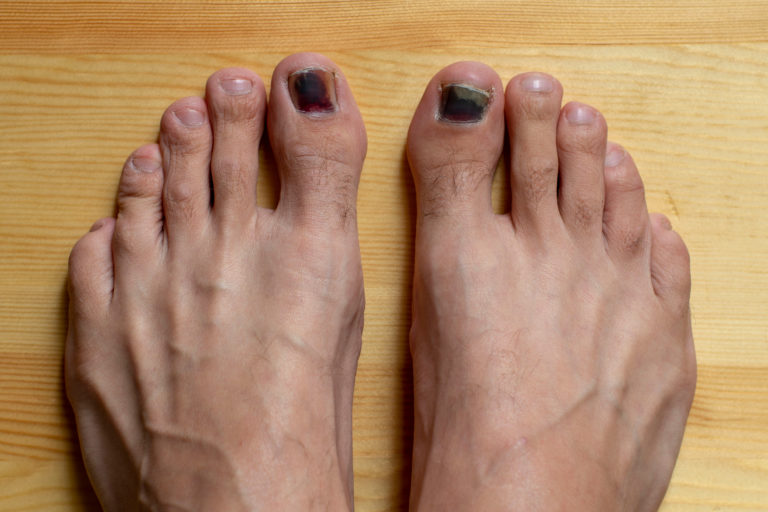
This video will go over the best ways to cure black toenail fungus for good!
This Video Will Go Over
The causes of black spots under the toenails.
The top 20 black toenail fungus home remedies and black toenail home treatment options.
This is our gallery of thick black toenail fungus pictures.
This gallery compares black spots under the toenails vs. black toenail fungus.
It also compares black toenail fungus or melanoma.
The most common symptom of black toenail fungus is that initially, toenail fungus develops.
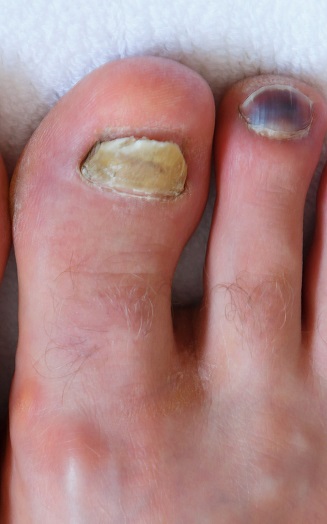
Patients routinely ask us, “what is black fungus under the toenail?”
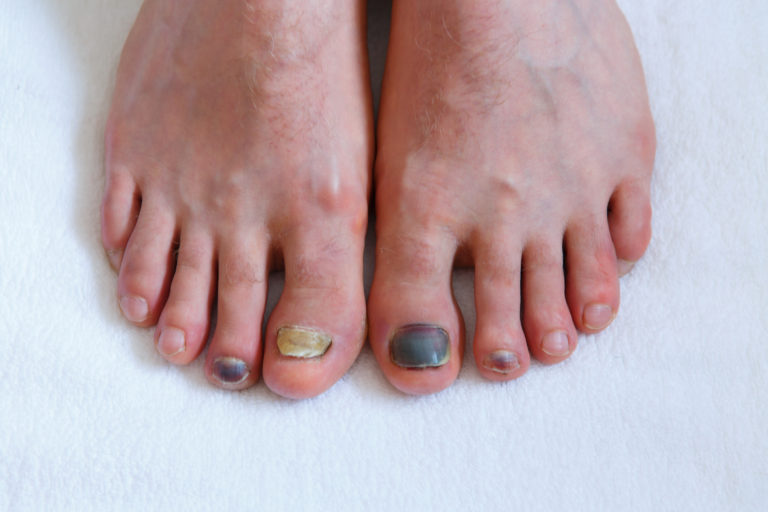
Getting rid of black toenail fungus is not a whole lot different than getting rid of the thick yellow fungus.
The difference is that black toenail fungus is causing the toenail to die, and there is dry blood between the toenail and the skin.
Click on the link or picture below for our best black toenail fungus treatment products.

A black line on the toenail fungus is called melanonychia.
This means that you have brown or black lines on your toenails.
A black line associated with toenail fungus might be melanoma, but this is usually unlikely.
If the black line extends into your skin, this is called a Hutchinson sign. A Hutchinson sign is much more likely to signal toenail cancer or toenail melanoma relating to your black toenail fungus. This might be something called subungual melanoma.
Black toenail cancer, such as subungual melanoma, is sporadic. Personally, in our clinic, we have seen thousands of black toenails and black lines on toenails. Between all those cases, we have rarely seen toenail melanoma.
But there are cases where we do perform biopsies if the toenail does appear suspicious. A toenail biopsy with a podiatrist can be one of the most effective ways to confirm no melanoma underneath the toenail.
It is essential to always check with your podiatrist and get a biopsy if you are worried about melanoma.
There is no 100% foolproof method to ensure that there is no melanoma underneath her toenail.
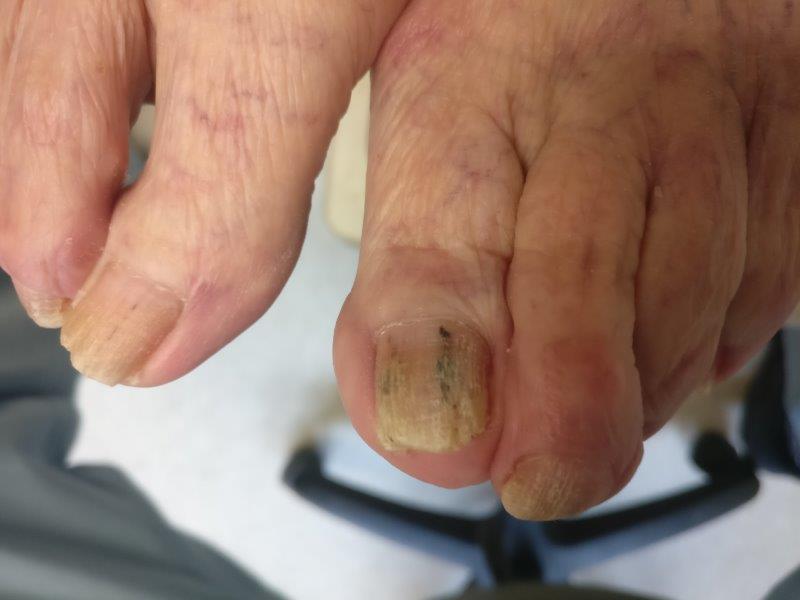
A subungual melanoma can develop underneath the toenail. This is a dangerous toenail cancer and toe cancer.
Toenail cancer is sporadic and accounts for only about 1-2% of all diagnosed melanomas in the human body.
Of the subungual melanomas, 60% are found in the fingernails, and about 40% are found in the toenails. It is sporadic ever even to consider the black toenail fungus or toenail melanoma question.
Subungual melanomas are more common in older individuals 60+ years or older and have a history of cancerous skin growth.
A subungual melanoma or a toenail melanoma black toenail line is usually very wide (over 3 mm).
The black line extending into the epidermis (surrounding toenail skin) is called a Hutchinson sign. It is usually associated with a thickened toenail nodule. It might also possibly show bleeding that extends into the surrounding toenail skin.is
Usually, only one toenail is infected. It is scarce for there to be multiple subungual melanomas.
Important melanoma warning: It is essential to see your podiatrist or your oncologist perform a biopsy.
If a subungual melanoma is not detected, it can spread through the rest of your body. Going to see your podiatrist is a great start to diagnose whether you had a black toenail fungus or a black line associated with subungual melanoma.
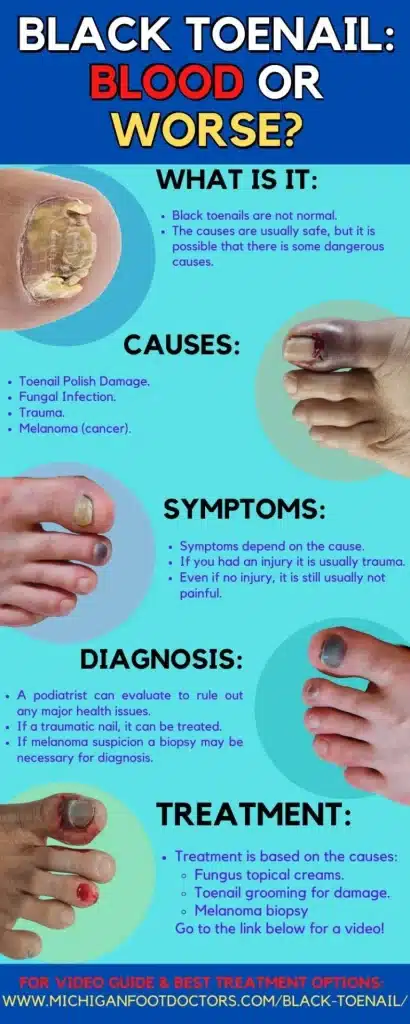

In our experience, it is much more likely to have a bruise underneath the toenail rather than black toenail fungus. In a lot of people, it is common to have both toenail fungi develop first. This toenail fungus can make the toenail thicker, leading to bleeding and bruising developing underneath the toenail.
This can make the toenail thick, dark, and discolored.
Toenail fungus does usually turns black after the death of the nail.
If there is not enough blood flow, the toenail will usually start to rise and turn black.
This can usually create a foul toenail odor and cause the toenail to decay. This can contribute to foot odor.
A dead toenail will eventually be overrun with bacteria and toenail fungus.
The recommended treatment is to come to see a great toenail fungus podiatrist such as us if you are in Michigan!
