
Medically reviewed by Dr. Tom Biernacki, DPM, board-certified foot & ankle surgeon (ABFAS & ABPM) at Balance Foot & Ankle · Last reviewed June 2026

I’m Dr. Tom Biernacki, DPM, FACFAS — board-certified foot & ankle surgeon, 3,000+ surgeries — and the orthotics decision tree I actually use in clinic has only three tiers. Tier 1 (80% of patients): Powerstep Pinnacle or CURREX RunPro, under $60. Tier 2: semi-custom heat-moldable, $90–$150. Tier 3: true cast custom, reserved for diabetic ulcer prevention, post-surgical reconstruction, and severe biomechanical deformity. Below is the exact framework — plus the OTC brands worth your money, the “custom” clinics worth walking out of, and the quick self-check that tells you in 30 seconds which tier you belong in. Call (810) 206-1402 for a same-day appointment at Howell or Bloomfield Township. Our board-certified podiatrists also craft custom orthotics molded to your feet for chronic heel, arch, and flat-foot pain.
![Best Insoles & Orthotics 2026 [Flat Feet, Plantar Fasciitis, Bunions]](https://www.michiganfootdoctors.com/wp-content/cache/flying-press/c8bafcb9b179f8abb63d894b334fd14e.jpg)
Watch: Best Insoles & Orthotics 2026 [Flat Feet, Plantar Fasciitis, Bunions] — MichiganFootDoctors YouTube
Quick Answer
Podiatrist-recommended orthotics are custom or clinically-vetted insoles designed to correct foot mechanics, reduce pain, and prevent future injury. Unlike generic drugstore insoles, they are prescribed based on your specific foot structure, gait, and diagnosis–whether that is plantar fasciitis, flat feet, or metatarsal stress. Custom orthotics are cast from a mold of your foot and typically last 3-5 years, while quality OTC options offer immediate relief for mild-to-moderate discomfort.
What Makes an Orthotic “Podiatrist-Recommended”?
Not all insoles are created equal. A podiatrist-recommended orthotic is one that is either custom-molded to your foot or clinically validated through podiatric research and real-world patient outcomes. These devices are not fashion accessories–they are therapeutic tools that modify how your foot contacts the ground, redistribute pressure, and correct abnormal motion patterns that cause pain and injury.
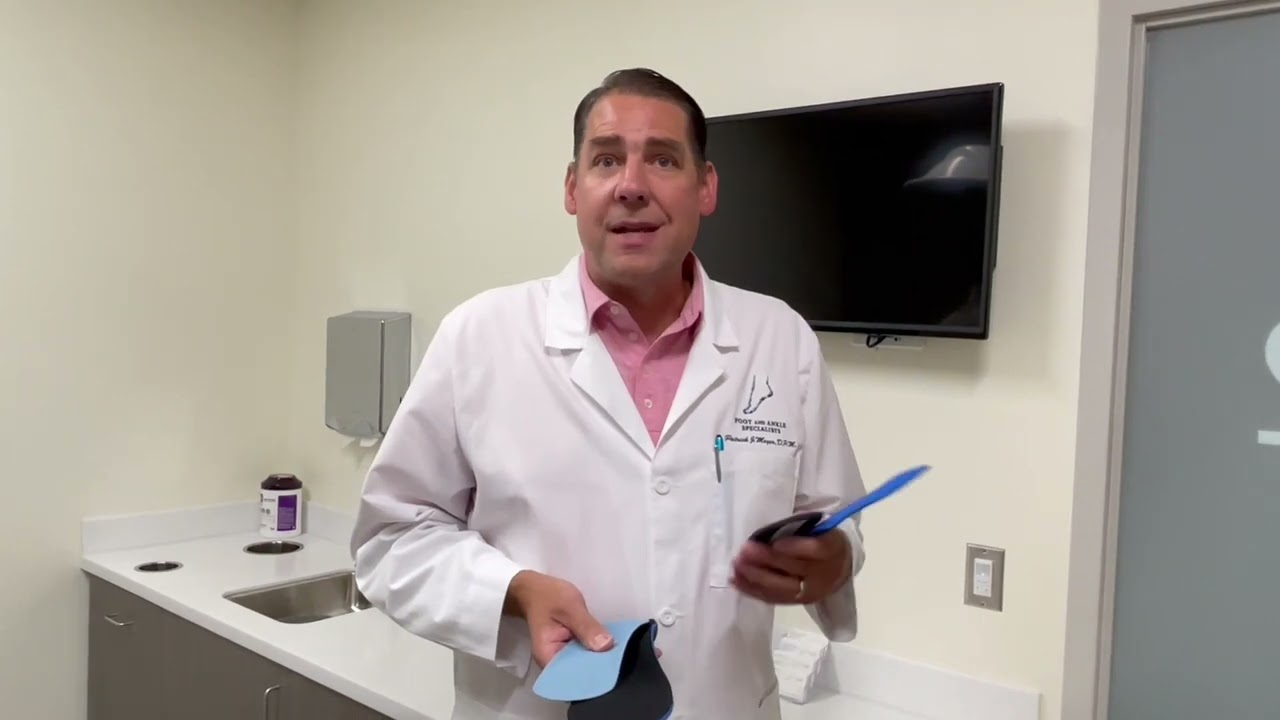
Watch: Custom Orthotic vs Over-the-Counter (OTC) Insert — Explained by Dr. Tom Biernacki
When I prescribe an orthotic to a patient, I am making a specific clinical decision based on:
- Your foot structure: Whether you have high arches, flat feet, or bunions
- Your gait pattern: How your foot strikes the ground and how your ankle, knee, and hip move through the stride
- Your condition: Plantar fasciitis, Achilles tendonitis, metatarsal pain, or preventive support
- Your activity level: Whether you need support for running, standing jobs, or daily walking
- Your footwear: What shoes you wear and how they interact with your foot mechanics
Custom vs. OTC Orthotics: Which Is Right for You?
| Feature | Custom Orthotics | OTC Orthotics |
|---|---|---|
| Cost | $400-$800 | $30-$80 |
| Insurance Coverage | Often covered (Rx-based) | Rarely covered |
| Fit & Customization | Mold/scan of YOUR foot | Generic sizing (Small/Med/Large) |
| Materials | Medical-grade (rigid/semi-rigid) | EVA foam, gel, soft cushioning |
| Durability | 3-5 years (with care) | 6-12 months (then support degrades) |
| Best For | Structural abnormality, chronic pain, serious sports | Mild discomfort, prevention, quick relief |
| Rx Required | Yes | No |
Custom orthotics are ideal if: You have a diagnosed foot condition (flat feet, high arches, bunions), chronic pain that has not responded to shoes or stretching, or you are an active person who wants optimized support. The upfront cost is higher, but insurance often covers them with a podiatrist’s prescription, and they last 3-5 years versus 6-12 months for OTC options.
OTC orthotics make sense if: You want to try additional support before committing to custom, you have mild foot fatigue or aches, or you need a quick solution for travel or casual shoes. Quality OTC options can provide real relief, especially for prevention.
The Most Common Mistake Patients Make With Orthotics
Common Mistake: Wearing Orthotics in the Wrong Shoes
I have seen patients spend $600 on custom orthotics, then put them in unsupportive flip-flops or fashion shoes that completely undo the orthotic’s benefit. An orthotic is only as good as the shoe it is in. If a shoe has too much flexibility, a thin sole, or excessive toe spring, the orthotic cannot do its job effectively.
The fix: Orthotics work best in shoes with a firm heel counter, moderate arch support, a stiff forefoot, and good depth. I typically recommend athletic shoes, supportive casual brands like New Balance or Brooks, or orthopedic footwear brands. Even custom orthotics perform only 60-70% as well in the wrong shoe as they do in the right one.
Best OTC Orthotics: Podiatrist Top Picks (2026)
Before patients invest in a custom orthotic, I steer most of them through a structured OTC trial. The right OTC pick depends on your arch height, primary activity, and the specific symptom you’re trying to control. Below are the eight insoles I recommend most often — with the exact use case for each. Every one of these meets my floor for a podiatrist-grade OTC: semi-rigid shell, deep heel cup, durable construction, and a real APMA-style biomechanical profile (not flat foam).
| Pick | Best For | Arch Type |
|---|---|---|
| #1 PowerStep Pinnacle | Best overall · first-episode plantar fasciitis | Neutral |
| #2 Pinnacle Maxx | Flat feet · heavy overpronation · long shifts | Flat / low |
| #3 Pinnacle Plus Met | Ball-of-foot pain · Morton’s neuroma | Neutral |
| #4 Pinnacle High Arch | Cavus foot · supination · ankle instability | High |
| #5 CURREX RunPro | Runners logging 15+ miles/week | Low / med / high |
| #6 Vionic Orthaheel Active | APMA Seal · gentler PowerStep alternative | Neutral / low |
| #7 Spenco Polysorb | Budget cushioning · mild symptoms | Any (mild) |

#1 PowerStep Pinnacle — Best Overall OTC Orthotic DPM First-Line
The single most-prescribed OTC insole in my practice. The semi-rigid arch shell delivers real biomechanical correction (not just cushioning), the deep heel cup controls calcaneal position, and the dual-layer EVA balances ground feel with shock absorption. Best for: neutral arches, first-episode plantar fasciitis, everyday sneakers and walking shoes. If you don’t know where to start, start here.
→ Check Price
#2 PowerStep Pinnacle Maxx — Best for Maximum Stability Heavy Overpronation
The Maxx uses a firmer, more rigid shell with a deeper heel cradle than the standard Pinnacle. This is what I recommend to heavier patients, severe overpronators, and anyone on their feet 8+ hours (nurses, line cooks, teachers). The trade-off: a slightly longer break-in. Best for: flat feet, severe overpronation, long shifts, work-boot use.
→ Check Today’s Price
#3 PowerStep Pinnacle Plus Met — Best for Ball-of-Foot Pain Metatarsal Pad
Same Pinnacle shell I trust as a first-line, but with a built-in metatarsal pad sitting just proximal to the 2nd–4th met heads. This is exactly where I want the load redistributed in patients with neuroma symptoms or capsulitis. I prescribe this when the chief complaint is forefoot pain rather than heel pain. Best for: metatarsalgia, Morton’s neuroma, ball-of-foot pain, forefoot burning.
→ Check Price on Amazon
#4 PowerStep Pinnacle High Arch — Best for Cavus Feet High Arch / Supination
Standard Pinnacle arches are built for neutral feet and undercut high-arched patients. The High Arch shell sits taller and firmer, filling the void under a cavus arch so the lateral foot stops doing all the work. This is what I reach for when a patient describes recurring ankle sprains or chronic lateral foot pain. Best for: cavus foot, supination, lateral ankle instability, recurrent ankle sprains.
→ Check Price on Amazon
#5 CURREX RunPro — Best for Runners Running
The decoupled heel and dynamic shell let the rearfoot pronate naturally through gait instead of locking it into a static position. Three arch profiles (low / medium / high) match the foot to the support — this is the only OTC insole in my running-injury patients that lets me dial in arch height instead of guessing. Best for: distance runners, triathletes, anyone logging 15+ miles/week.
→ Check Price on Amazon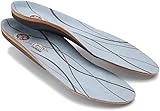
#6 Vionic Orthaheel Active Full Length — APMA Seal APMA Seal
Vionic carries the APMA Seal of Acceptance and uses a Tri-Planar arch with a 4° heel wedge to mechanically reduce excess pronation. The shell is rigid enough to function as a true biomechanical orthotic, not a foam liner. I use this as the “Pinnacle alternative” for patients who don’t tolerate PowerStep’s arch profile. Best for: plantar fasciitis, overpronation, athletic shoes with deep heel pockets.
→ Check Price on Amazon
#7 Spenco Polysorb Cross Trainer — Budget Pick Under $20
When budget rules out PowerStep or Vionic, Spenco Polysorb is the OTC I send patients to. The Polysorb foam delivers real shock absorption, the heel cup is moderate but functional, and it carries the APMA Seal. Limitation: it is more cushion-and-cradle than a corrective shell, so I reserve it for mild symptoms. Best for: gym shoes, casual sneakers, fatigue and shock absorption (not severe biomechanics).
→ Check Price on AmazonFoundation Wellness Clinical-Grade Insoles DPM’s #1 Pick When OTC Isn’t Enough
When my patients have already tried PowerStep or Superfeet and still need more, I bridge them to Foundation Wellness — a clinical-grade arch profile engineered for plantar fasciitis, flat feet, and chronic heel pain. 30-day satisfaction guarantee. This is the step before going fully custom.
See the Custom Orthotic Process →Which Insole Matches Your Arch Type?
Best insoles for flat feet (low arch)
Start with the PowerStep Pinnacle Maxx — the firmer shell and angled heel platform are built specifically for flat feet and the heavy overpronation that comes with them. If the Maxx feels too aggressive underfoot, the Vionic Orthaheel Active reaches the same pronation-control goal with a softer profile. Flat feet that are still painful after 4-6 weeks in the right insole — especially a rigid flatfoot or posterior tibial tendon dysfunction — are one of the situations where I move patients to a custom orthotic. For the complete flat-feet rankings, see the best insoles for flat feet guide.
Best insoles for a neutral arch
The standard PowerStep Pinnacle is my first-line for neutral feet. If your main complaint is ball-of-foot pain rather than heel or arch pain, switch to the Pinnacle Plus Met for its built-in metatarsal pad. Runners should look at the CURREX RunPro in the medium profile.
Best insoles for high arches (cavus foot)
A standard-height arch will undercut a cavus foot. Use the Pinnacle High Arch for everyday shoes — it also holds up well in boots and stiff work footwear. High-arched feet with recurring ankle sprains deserve a biomechanical exam — lateral instability often needs more than an insole.
Conditions That Respond Best to Orthotics
- Plantar Fasciitis: A proper arch orthotic reduces the stretch on the plantar fascia by 30-40%, allowing inflammation to heal. See our complete guide to plantar fasciitis treatment.
- Flat Feet (Pes Planus): Custom orthotics restore the arch and normalize pronation mechanics.
- High Arches (Pes Cavus): Orthotics distribute pressure more evenly across the forefoot and heel.
- Bunions: Orthotics reduce motion at the first metatarsocuneiform joint and decrease pain and pressure on the bump.
- Metatarsal Pain & Stress Fractures: A Morton’s extension or metatarsal bar in an orthotic unloads the painful area and speeds healing.
- Achilles Tendonitis & Heel Pain: A heel lift or medial wedge reduces tension on the Achilles and redistributes weight away from the painful tendon insertion.
- Knee & Hip Pain: Correcting pronation or supination with orthotics often eliminates secondary knee pain–this is often overlooked.
How to Know If You Need Custom Orthotics
- Chronic pain that does not improve with 4-6 weeks of shoes + stretching. If basic conservative care is not working, your foot likely has a structural issue that requires a custom correction.
- You have a diagnosed foot deformity: Bunions, flat feet, high arches, or a history of stress fractures all benefit from custom support.
- Your pain worsens with activity or standing. This indicates abnormal loading patterns that orthotics are designed to correct.
- Insurance covers them. With a podiatrist’s prescription and diagnosis code, many plans cover 50-80% of the cost.
- You are highly active. Runners, athletes, or people who stand all day get the most value from custom orthotics because the precision fit allows optimal performance.
- You have tried multiple shoes and OTC insoles without relief. If supportive shoes did not help, the problem is your foot mechanics–not the shoe brand.
📖 Read more: Custom Orthotics: The Complete Patient Guide from a Podiatrist
APMA: Podiatrist Recommendations
What to Expect at a Custom Orthotic Appointment in Michigan
- Comprehensive foot exam: I assess your arch height, alignment, flexibility, and any deformities. I watch you walk to see your gait pattern.
- Biomechanical analysis: I may use a gait scanner or perform manual motion testing to quantify pronation, supination, and structural limitations.
- Diagnosis-specific casting: I cast your foot in a neutral position using plaster, foam, or digital scanning. This neutral mold ensures the orthotic corrects your mechanics, not just accommodates them.
- Prescription to the lab: I send the mold to our orthotic lab with specific instructions: arch height, forefoot posting (angle corrections), heel cup depth, material choice, and any specialized features.
- Delivery & fitting: The custom orthotics arrive in 2-3 weeks. We fit them in your shoes, check for any pressure points, and adjust if needed.
- Break-in period: You wear them gradually (2-3 hours the first day, increasing by a few hours daily) to let your feet adapt.
- Follow-up: Most patients return 2-3 weeks after delivery to ensure proper fit and make fine adjustments if needed.
Frequently Asked Questions
Ready to Get Relief? Schedule Your Orthotic Consultation
- Howell: 4330 E Grand River Ave, Howell MI 48843
- Bloomfield Township: 43494 Woodward Ave #208, Bloomfield Township MI 48302
Related Insole & Orthotic Guides
Looking for the right insole for a specific condition or use case? These podiatrist-tested guides cover the most common scenarios:
- Best Insoles for Plantar Fasciitis (2026) — by arch height with full ranking.
- PowerStep vs Superfeet — direct insole brand comparison.
- PowerStep vs VKTRY Orthotics — carbon-fiber rebound vs traditional.
- Currex vs Superfeet — for runners and standing-all-day workers.
- PowerStep Pinnacle vs ProTech vs Slim — within-brand comparison.
- Best Orthotics for Overpronation — for inward-rolling feet.
- Best Metatarsal Pads — for ball-of-foot pain.
- Best Shoes for Extensor Tendonitis & Top of Foot Pain — the shoe-and-insole pairing that offloads the top of the foot.
- Metatarsal Pad Placement Guide — exact positioning instructions.
- Best Night Splints for Plantar Fasciitis — overnight stretching options.
Get Expert Care at Balance Foot & Ankle
Same-week appointments at our Howell and Bloomfield Township offices. Board-certified podiatric surgeons. Most insurance accepted.
Doctor Hoy’s Natural Pain Relief Gel — when patients start wearing new orthotics, the arch and fascia can feel sore during the adjustment period. I recommend Doctor Hoy’s arnica and camphor formula for targeted topical relief during break-in. It absorbs instantly with no greasy residue or artificial fragrance.
Not ideal for: open wounds, broken skin, or camphor sensitivity. Not a substitute for a proper orthotic fit.
Shop Doctor Hoy’s at MFD →Affiliate disclosure: Dr. Tom earns a commission at no extra cost to you.
Dr. Tom Biernacki DPM also recommends Foundation Wellness foot care products — clinically curated brands for insoles, socks, and recovery tools.
See a Michigan Podiatrist for Custom Orthotics
Over-the-counter inserts work well for many people, but if you have not improved or you need a prescription-grade device molded to your foot, our podiatrists in Howell and Bloomfield Township can examine you, take a 3D cast, and fit true custom orthotics.
Book an appointment with a podiatrist
Over-the-counter inserts suit plenty of feet, and for some people they are simply not enough. Which group you fall into depends on your arch height, your gait and what is actually hurting — all of which take only a few minutes to assess in person. Balance Foot & Ankle sees patients at two offices — Howell in Livingston County, and Bloomfield Township in Oakland County.
Call (810) 206-1402 or use the form below and our team will find you an appointment time.

Dr. Tom Biernacki, DPM is a board-certified foot & ankle surgeon (ABFAS & ABPM) at Balance Foot & Ankle Specialists in Southeast Michigan. With over a decade of clinical experience, he specializes in heel pain, bunions, diabetic foot care, sports injuries, and minimally invasive surgery. Dr. Biernacki is a member of the APMA and ACFAS, and his patient education content on MichiganFootDoctors.com and YouTube has made him one of the most-followed foot & ankle educators on YouTube.