

How do you measure real shoe size at home.
- You would need to get a couple pieces of equipment. First:
- The first thing you need is some tape and a large piece of paper which is bigger than your foot.
Step one:
- Take a piece of paper down to the floor.
- You will then prepare to draw a trace outline of your foot.
- So avoid putting this on carpet or any other soft surface.
- Make sure to even flat surface.
Step two:
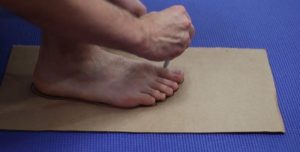
- Place your foot on top of the paper.
- This should be a firm flat piece of paper on a firm flat piece of floor.
- Try to put your foot on the paper the long ways.
- Grab a piece of paper and draw an outline around your foot trying to keep the pen vertical or the pencil vertical.
Step three:
- Draw the outline of your foot all the way around your foot.
- Drawing this line is okay around the sock, but don’t actually be wearing shoe.
Step four:
- Draw a rectangle around the foot.
- This is the width and the length of the foot.
Step five and step six :
- Measure the length, and measure the width.
- This is the length and width of your foot.
Step seven:
- Subtract 3/16 of an inch from each number.
- This is accommodate the small space between the line made by the pencil in your actual foot.
Step eight:
- Use Google define the sizing chart for your foot. Depending on the country or in can use European sizes or American sizes. Make sure you’re using the appropriate one for your order.
- It is possible to order off Amazon from Europe or from another country. So just be aware of your ordering the right size.
Step nine:
- Make sure if you are woman, you are using woman sizes and if you are a man you are using men sizes.
- This one gets me all the time in the clinic when I am grabbing inserts for somebody!
Step ten:
- It’s always possible that your shoe size all that big or little bit small.
- At this point you can use our guide for making sure they shoe fit smaller or smaller shoe fits bigger.

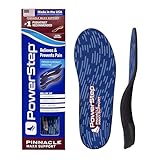
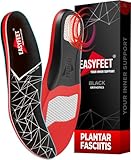

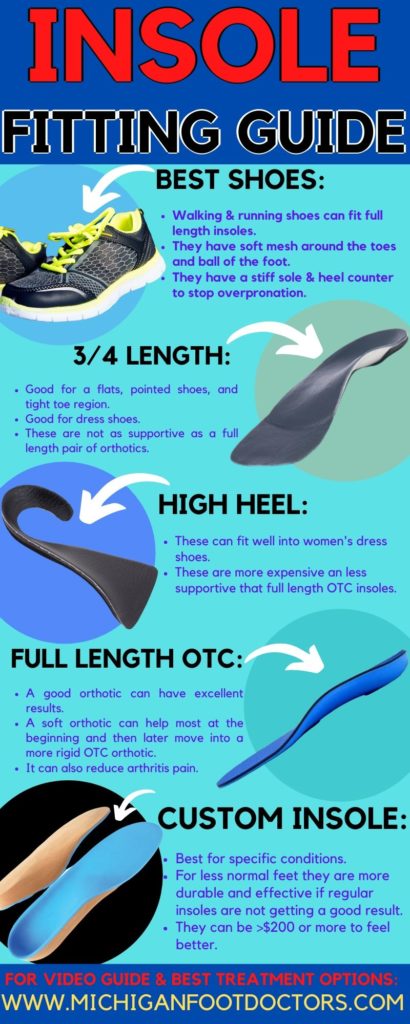
Best Dress Shoe Orthotics
- These are a great choice for dress orthotics.
- If you have a pointed shoe, this may benefit most from 3/4 orthotics.
- A full-length dress shoe orthotic can work better in wide-toe box or loafer style dress shoes.

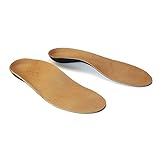

Best 3/4 Length Orthotics:
- These are great options for women’s dress shoes and thinner shoes.
- This may be a good starting option for insoles and orthotics if you have never worn a pair before.
- The break-in period may be easier than getting used to a firmer full-length pair.
- These are not the most supportive pair of orthotics.
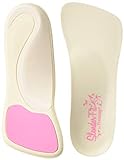
Get A Great Dynamic Stretch
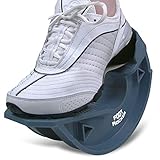
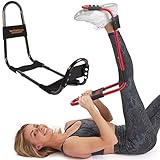
- It is possible to stretch on your own, but these products can also really help!
- These are a great option for increasing foot flexibility.
- I personally use these stretching devices every single day to maintain good flexibility and shoe fit.
- This will take pressure off of the ball of your foot.
- We personally prefer this method of stretching.



Dr. Tom Biernacki, DPM is a board-qualified podiatrist and foot & ankle surgeon serving Southeast Michigan at Balance Foot & Ankle Specialists. A Michigan native, Dr. Biernacki earned his undergraduate degree from Michigan State University and his Doctor of Podiatric Medicine (DPM) from Kent State University College of Podiatric Medicine. He completed a three-year comprehensive surgical residency in foot and ankle surgery in the Detroit metro area.
Dr. Biernacki specializes in the treatment of heel pain, bunions, hammertoes, diabetic foot care, sports injuries, flatfoot correction, and minimally invasive foot surgery. He is dedicated to providing evidence-based, patient-centered care that helps people of all ages stay active and pain-free.
He sees patients at multiple convenient Metro Detroit locations and is committed to community education through the MichiganFootDoctors.com resource library. Dr. Biernacki is a member of the American Podiatric Medical Association (APMA) and the Michigan Podiatric Medical Association (MPMA).