

Ball of Foot Pain? Get Fast Relief from Michigan Foot Specialists
Pain in the ball of your foot can make walking, standing, or exercising uncomfortable and frustrating. Our Michigan podiatrists specialize in diagnosing the cause and providing personalized treatment to relieve pain, prevent long-term damage, and restore comfort.
Schedule a Toenail Consultation- Serving patients across Michigan
- Same-week appointments available


What Causes Ball of Foot Pain?
Ball of foot pain, also known as metatarsalgia, occurs when the front part of your foot experiences excess pressure or inflammation. Common contributing factors include:
- High-impact activities – Running, jumping, or sports
- Improper footwear – Tight shoes, high heels, or unsupportive soles
- Foot structure issues – Flat feet, high arches, or bunions
- Medical conditions – Arthritis, diabetes, or nerve disorders
- Age-related changes – Fat pad thinning or ligament strain
Symptoms may include sharp, aching, or burning pain in the forefoot, numbness, tingling, or a feeling of walking on pebbles.
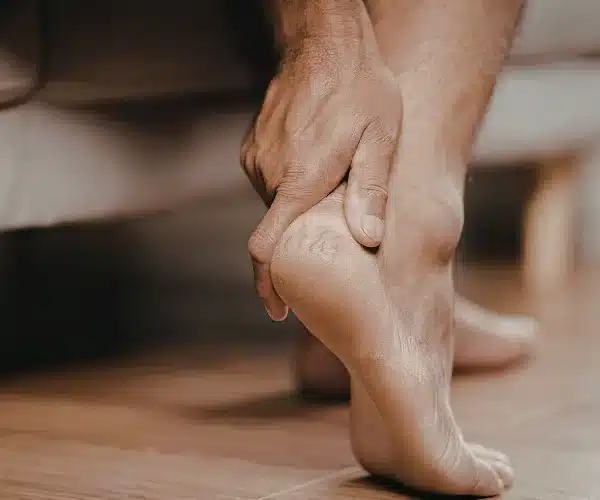
Causes of Ball of Foot Pain
Ball of foot pain, also known as metatarsalgia, can result from several common factors:
- High-Impact Activities – Running, jumping, or prolonged standing can place excessive stress on the forefoot.
- Improper Footwear – Tight shoes, high heels, or unsupportive soles increase pressure on the ball of the foot.
- Foot Structure Issues – Flat feet, high arches, bunions, or toe deformities can alter pressure distribution.
- Medical Conditions – Arthritis, diabetes, nerve disorders, or inflammation may contribute to pain.
- Age-Related Changes – Fat pad thinning over the metatarsal heads can reduce cushioning and lead to discomfort.
A podiatric evaluation is the best way to identify the exact cause and rule out serious issues.
Treatment Options
Most cases of ball of foot pain are managed conservatively with:
- Rest and Activity Modification – Avoid high-impact activities or prolonged standing.
- Footwear Adjustments – Supportive shoes or cushioned insoles relieve pressure.
- Custom Orthotics – Correct alignment and reduce forefoot stress.
- Pain management and wound care
- Medication & Therapy – Anti-inflammatory medications, ice, and stretching exercises help manage pain and inflammation.
- Padding & Taping – Metatarsal pads or taping techniques relieve pressure and protect sensitive areas.
Surgery (If Necessary)
Surgery is considered when conservative measures fail to relieve pain or if structural problems require correction. Common procedures include:
- Metatarsal Shortening or Realignment – To reduce pressure on the forefoot.
- Bunion or Toe Deformity Correction – Realigns toes to relieve pain in the ball of the foot.
- Nerve Decompression or Removal (Morton’s Neuroma Surgery) – For nerve-related forefoot pain.
All procedures are performed safely in-office or at an accredited surgical facility by our board-certified podiatrists.
Recovery & What to Expect
Recovery depends on the treatment method:
- Rest and Activity Modification – Avoid high-impact activities or prolonged standing.
- Footwear Adjustments – Supportive shoes or cushioned insoles relieve pressure.
- Medication & Therapy – Anti-inflammatory medications, ice, and stretching exercises help manage pain and inflammation.
- Padding & Taping – Metatarsal pads or taping techniques relieve pressure and protect sensitive areas.
Our Michigan podiatry team guides you through every step, from diagnosis to long-term relief, ensuring a safe and effective recovery.
Recommended Product
Custom Orthotics & Supportive Footwear for Ball of Foot Pain
If you’re dealing with ball of foot pain, the right support can make all the difference. At Balance Foot & Ankle Specialist, we recommend custom orthotics and supportive footwear to reduce pressure, improve alignment, and protect your forefoot.
Benefits include:
- Reduced pressure on the ball of the foot to relieve pain and inflammation
- Corrected foot alignment to prevent recurring pain or deformities
- Improved comfort and stability while walking, running, or standing
- Long-term prevention of forefoot injuries and nerve irritation

Our podiatrists in Michigan evaluate your gait, foot structure, and activity level to design personalized orthotics that work with your lifestyle. Pairing them with proper shoes maximizes relief and supports healthy foot function.
- Even patients undergoing surgical correction or conservative therapy benefit from custom orthotics to speed recovery and prevent future discomfort.
Ball Of Foot Pain (Causes, Symptoms, Diagnosis & Best Home Treatment!)
Ball Of Foot Pain causes are
- Metatarsalgia
- Morton’s Neuroma
- Hammer Toes
- Plantar Plate Tears
- Fat Pad Atrophy
- Ball of the foot pain is one of the most common foot problems we see!
- It is too much pressure on the front of your foot, in it can lead to over five common problems.
- We have seen over 10,000+ cases of this. Let us help.
Pain in Ball of Foot and Big Toe Treatment Video:
https://youtu.be/tqOzHZ8rUqsWhy Does The Ball Of My Foot Hurt?
- The ball of the foot usually hurts due to too much pressure on the front of the foot.
- As listed above, this can lead to numerous conditions, but they are all made worse by more pressure.
- Usually, about 1/3rd of each step should be during push-off, but if the calf and hamstring are tight, this could be higher.
- So more time spent on the ball of the foot will cause more ball of the foot pain!.
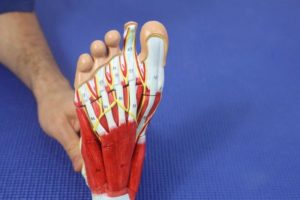
Ball Of Foot Pain Running:
- Like above, running also increases the time spent on the ball of foot push-off.
- Each step leads to an impact of 3-4x of your body weight!
- The problems listed below will be magnified while running.
- This magnified pain is made even worse if the hamstrings, calves, and plantar fascia are tight.
- The pain isn’t just during running but maybe a warning of a deeper cause.
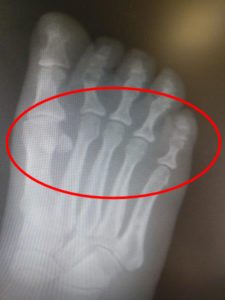
This is most common in people who have very tight hamstrings. Calf muscles are putting much more pressure on the ball the foot. This can lead to neuroma, metatarsal, or even stress fracture pain.
Ball Of Foot Pain Running:
- Like above, running also increases the time spent on the ball of foot push-off.
- Each step leads to an impact of 3-4x of your body weight!
- The problems listed below will be magnified while running.
- This magnified pain is made even worse if the hamstrings, calves, and plantar fascia are tight.
- The pain isn’t just during running but maybe a warning of a deeper cause.
This is most common in people who have very tight hamstrings. Calf muscles are putting much more pressure on the ball the foot. This can lead to neuroma, metatarsal, or even stress fracture pain.
Pain In The Ball Of The Foot Problems
There are numerous causes of the ball of foot pain:
1. Metatarsal-phalangeal Joint Pain
- Don’t let the huge name scare you!
- This is just generalized pain located in the ball of the foot.
- Sometimes the only real cause is increased pressure.
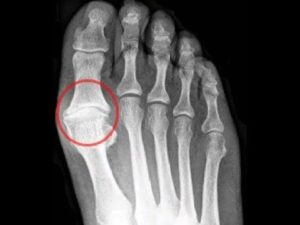
Big toe joint arthritis may cause ball of the foot pain. This is the 1st metatarsal phalangeal joint with end-stage arthritis.
Metatarsal-phalangeal Join Pain Treatment:
- This focuses on offloading the ball of the foot.
- It also focuses on stretching out the posterior muscle groups.
- This leads to a decrease in the ball of foot pressure.
2. Morton’s Neuroma
- This can cause numbness, burning, and tingling.
- This is usually around the 3rd and 4th toes.
- You may even feel an itchy ball of your foot.
- There may be a clicking noise often associated with this.
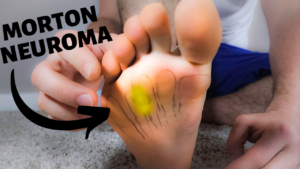
This is Morton’s neuroma. It is most common in between the 3rd and the 4th metatarsals.
Morton’s Neuroma Home Treatment:
- This guide explains home treatment options.
- Control and cushioning of the ball of the foot are needed.
- It is also necessary to stretch and re-train the posterior muscle groups.
- If these methods do not work, invasive treatment may be necessary.
3. Capsulitis
- This is pain at the base of the toes.
- If you try and bend the smaller toes back or up, you will feel pain.
- This is inflammation of the flexor tendons that bend the toes down.
- This can be very common in the running.
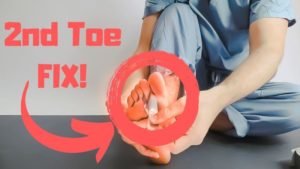
Capsulitis of the Second Toe Taping: Plantar Plate Tear Treatment 2020
- Decrease inflammation.
- Decrease ball of foot pressure through stretching.
4. Metatarsal Stress Fracture:
- This is a gradual onsetting pain over a few days or weeks.
- It eventually becomes too painful to walk or run.
- This is most common in weekend warriors who start training very hard.
- Usually in people start running many miles right away.
Metatarsalgia or ball of the foot pain is the pain in the front of the foot.
This is most common in people who have very tight hamstrings; calf muscles are putting much more pressure on the ball the foot. This can lead to neuroma, metatarsal, or even stress fracture pain.
Metatarsal Stress Fracture Home Treatment:
- Treatment is based on proper diagnosing.
- Imaging and X-rays may be needed to confirm the stress fracture.
- Off-loading will be necessary to let the fracture heal.
5. Painful Callus On Ball Of Foot
- A callus on the ball of the foot is very common.
- This is a sign of too much pressure on the ball of the foot.
- Calluses develop in relation to the amount of pressure placed on them.
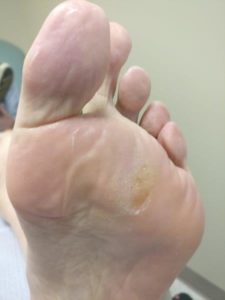
Corns and calluses are the most common over the ball of the foot and between the toes. Acorn is essentially a plugged sweat gland that goes deep down like a spike, whereas a callus is a flat buildup of hard skin in a pressure area of the foot. Both are similar, and corn is more narrow and spiky underneath.
Painful Callus On Ball Of Foot Treatment:
- Soften up the callus through home remedies.
- Remove it after it is softened.
- Take precautions to remove the cause of the callus on the ball of the foot!
6. Blister On Ball Of Foot
- A blister will form from shear forces on the ball of the foot.
- They can have both blood or serous fluid.
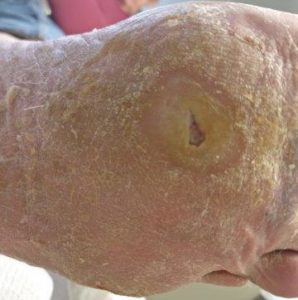
This stone bruise on the bottom of the ball of the foot caused a blister and the wound.
As you get older, you have a lot less fat pad on the ball of your foot in your heel. This can cause you to blister and bruise underneath.
It is important to keep pressure off this site, especially as you begin to lose sensation in the bottom of your foot.
Blister On Ball Of Foot Treatment:
- Learn whether to pop the blister or not.
- Then learn how to cover your blister on the ball of the foot.
- Then how to keep the ball of the foot blister from coming back!
7. Second Toe Longer Than Big Toe:
- This will cause all the pain to be concentrated at the base of the 2nd toe.
- This is perhaps the most common cause of metatarsalgia (generalized ball of foot pain.).
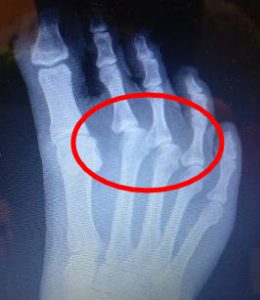
This is an example of a plantar plate rupture of the second, third toes. This started as second toe capsulitis and plantar plate pain, but eventually, it led to a full plantar plate rupture. This can cause hammertoes, toe dislocation, and crossover toes. If these toes were stabilized with taping, this could have prevented this dislocation.
Second Toe Longer Than Big Toe Treatment:
- This is done by controlling pressure on the forefoot.
- The only way to correct the length permanently is through surgery.
- But this is rarely needed.
8. Corn On Ball Of Foot
- A foot corn on a ball of the foot can cause deep pinpoint pain.
- A corn is different than a callus, and it is thinner and deeper.
- It can feel like a needle digging deep in through the skin.
- It is thought to be a thickened and scarred sweat duct.
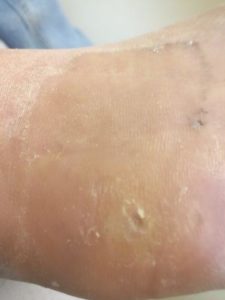
This is heloma durum, and this is another name for a hard corn.
Corn On Ball Of Foot Treatment:
- Treatment of foot corn on the ball of the foot is usually done by sharp steel!
- Since the corn is very deep, moisturizing does not work as well as for a callus.
- You can always try the skin removal techniques shown for a callus on the ball of the foot.
- But the results will not be as impressive.
9. Hard Skin On Ball Of Foot
- Hard skin on the ball of the foot is essentially a callus on the ball of the foot.
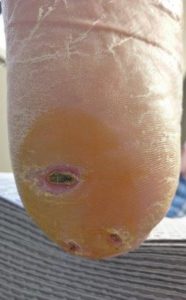
Hard skin can develop in pressure areas of the foot. This can lead to an ulcer with cracks and fissures.
Hard Skin On Ball Of Foot Treatment:
- Treatment can be done almost completely at home!
- There are a variety of home remedies that can soften the skin.
- The skin can then be safely and easily removed.
10. Stone Bruise On Ball Of Foot
- A stone bruise on the ball of the foot is simply a deep contusion.
- It gets its name from stepping on a stone.
- This can penetrate through the protective fat pad.
- The deep tissue can take numerous weeks to get better!
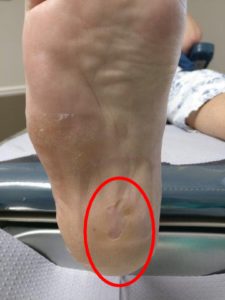
The stone bruise on the heel can take about 5 to 7 days for the initial bruising to go away.
If you really bruise the bone underneath, it can take even up to 6 to 8 weeks. You will feel a lot better quicker if you wear good orthotics and good shoes.
Stone Bruise On Ball Of Foot Treatment:
- Treatment is based on rest, ice, compression, and elevation.
- Ball of foot cushion through padding and gel inserts is most important.
- The first few days are usually the most painful; then, it gets better very quickly!
11. Cyst On Ball Of Foot
- A cyst on the ball of the foot is almost always a ganglion cyst.
- This is a pouching of joint fluid.
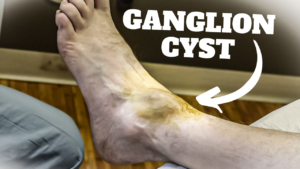
A hard cyst can develop in the foot and ankle. This is most commonly non-dangerous fluid called a ganglion cyst.
Cyst On Ball Of Foot Treatment:
- This is usually treated by aspirating with a needle.
- Surgical removal can provide more long-term results.
12. Hard Lump On Ball Of Foot
- This is most likely a foot corn on the ball of the foot.
- It can also be a plantar fibroma.
- A plantar fibroma feels like a pebble underneath the skin, but the skin is normal.
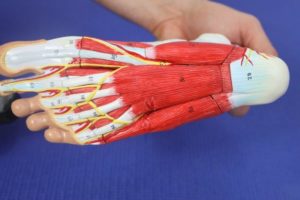
A plantar fibroma can form anywhere along with the structures the bottom of the foot here. There is a layer of tissue called the plantar fascia, with muscles underneath it.
We like to think of a plantar fibroma, almost like pair with scar tissue throughout the plantar fascia. The more you keep walking on it, the more swollen and agitated it gets. It fills up with more fluid and causes more pain.
Hard Lump On Ball Of Foot Treatment:
- Ball of foot cushion is the primary conservative treatment to achieve relief!
- Surgery may be necessary to remove the knot on the ball of the foot.
13. Plantar Plate Injury
- Plantar plate injury can occur when the ligament holding the second metatarsal theology joins together start to become injured.
- This is one of the most common causes of second toe pain in the bulk of the foot.
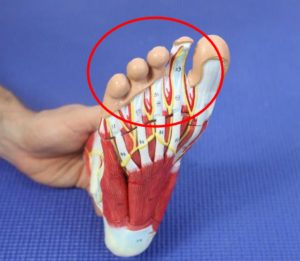
Middle toe pain can be caused by hammertoes, plantar plate tears, capsulitis, Mortons neuroma pain, stress fractures, and metatarsalgia.
Cyst On Ball Of Foot Treatment:
- This is usually treated by aspirating with a needle.
- Surgical removal can provide more long-term results.
Pain In Ball Of Foot Under Big Toe:
The most common causes of pain in the ball of the foot under the big toe are:
1. Sesamoiditis:
- This is inflammation of the ligaments and soft tissue directly under the big toe joint.
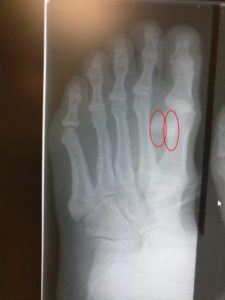
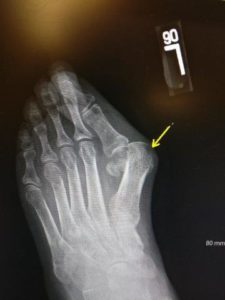
2. Bunion:
- This is a big bump on the inside of the big toe joint.
3. Bone Spurs Ball Of Foot:
- This is when you have decreased motion in the big toe.
- There is usually a bone bump on top of the big toe joint.
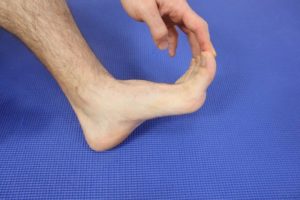
4. Turf Toe:
- This is when the big toe gets jammed back or bent back.
5. Gout Ball Of Foot:
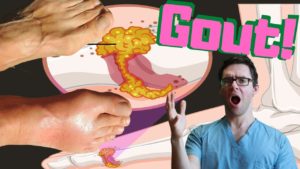
- Ball of foot gout is almost always at the big toe joint.
- A gout is a form of crystals that can cause arthritis.
- This is most common in dehydration states, high protein intake, and after alcohol consumption.
6. Bone Spurs Ball Of Foot:
- Bone spurs at the ball of the foot usually form at the big toe joint.
- This is a condition called hallux rigidus.
7. Pain In Ball Of Foot When Walking:
- Pain in the ball of the foot when walking can be any of the above.
- Just like running, walking puts increased pressure on the ball of your foot.
- Each step is 1-2x your body weight.
- This can be a magnification of a further problem that is already there.
- If it does not seem like any other problems above, assume metatarsalgia.


Why Michigan Patients Trust Us for Black Toenail Treatment
Patients throughout Michigan trust Balance Foot & Ankle Specialist because we combine advanced podiatric care with a compassionate, patient-focused approach.
Our doctors are highly trained in diagnosing and treating complex foot conditions, from everyday pain to advanced surgical needs.
Book a Consultation NowFor Same Day Visit Call: (810) 206-1402
Our board-certified podiatrists specialize in foot and ankle care.
Expert Podiatric Care You Can Trust

Dr. Tom Biernacki, DPM
Is a board-certified foot and ankle specialist with extensive experience in treating conditions such as ball of foot pain, bunions, nerve disorders, and sports-related injuries.
Book Now
Dr. Carl Jay,
DPM
Specializes in both conservative and surgical treatments for a wide range of foot and ankle conditions.
Book Now
Dr. Daria Gutkin, DPM
Provides comprehensive foot and ankle care with a focus on nail conditions, sports injuries, and diabetic foot health.
Book NowFAQ: Ball of Foot Pain
 Why are my toenails turning black and falling?
That’s a really common — and understandably scary — question. Toenails usually turn black and fall off because something is damaging the nail or the tissue underneath it. Here are the most likely reasons, from most common to more serious.
What causes toenails to turn black and falling?Toenails usually turn black and fall off because the nail or the tissue underneath it has been damaged. The discoloration is often a sign of bleeding, pressure, infection, or poor blood flow. Here are the most common causes, explained simply.
Why do toenails turn black and fall off?Toenails usually turn black and fall off because something damages the nail or the tissue underneath it. The dark color is often trapped blood, infection, or loss of blood supply. Here are the most common reasons.
Don’t Let Ball of Foot Pain Slow You Down
Ball of foot pain can make walking, standing, and daily activities uncomfortable. Get professional evaluation and relief from Michigan’s trusted podiatry specialists. relief.
Schedule Your Appointment TodayCaregiver appointments welcome. Same-week appointments may be available.
Related Treatment Guides

Dr. Tom Biernacki, DPM is a double board-certified podiatrist and foot & ankle surgeon serving Southeast Michigan at Balance Foot & Ankle Specialists. With over a decade of clinical experience and thousands of surgeries and procedures performed, Dr. Biernacki brings exceptional expertise to every patient interaction.
A Michigan native, Dr. Biernacki earned his undergraduate degree from the University of Memphis and his Doctor of Podiatric Medicine (DPM) from Kent State University College of Podiatric Medicine. He completed a three-year advanced surgical residency in foot and ankle surgery in the Detroit metro area, followed by additional fellowship training in podiatric surgery.
Dr. Biernacki specializes in the treatment of heel pain, bunions, hammertoes, diabetic foot care, sports injuries, flatfoot correction, and minimally invasive foot surgery. He is dedicated to providing evidence-based, patient-centered care that helps people of all ages stay active and pain-free.
Outside the office, Dr. Biernacki is a devoted family man — married for over 15 years and a proud father of four children. He is committed to community education through the MichiganFootDoctors.com resource library and his YouTube channel, which has reached over one million views. Dr. Biernacki is a member of the American Podiatric Medical Association (APMA) and the American College of Foot and Ankle Surgeons (ACFAS).