
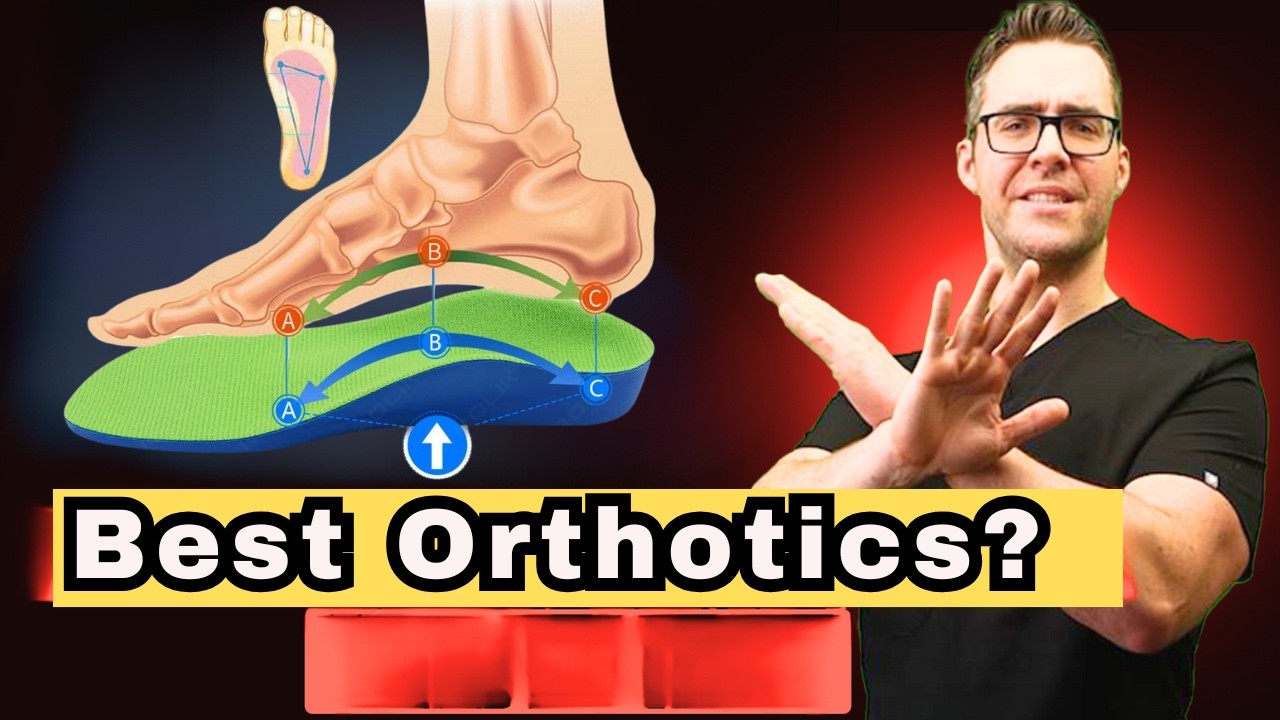
You are in the right place. Dr. Tom Biernacki, DPM, FACFAS — board-certified foot & ankle surgeon with 3,000+ surgeries — explains exactly what 3D printed orthotics means and what actually works. Call (810) 206-1402 for a same-week appointment at our Howell or Bloomfield Township office.
Quick answer: 3D-printed orthotics are built from a digital scan rather than a plaster cast, which makes them reproducible and allows stiffness to vary across zones of the same shell. The real advantages are consistency and faster remakes — for most patients a well-made traditional orthotic performs comparably. Call (810) 206-1402.
Medically reviewed by Dr. Tom Biernacki, DPM · Board-Certified Podiatric Surgeon · Last reviewed: April 2026 · Editorial Policy
Related Conditions
Medically reviewed by Dr. Tom Biernacki, DPM
Board-certified podiatric surgeon | Balance Foot & Ankle
Last reviewed: May 2026
Quick Answer
3D-Printed Orthotics: How They Are Made, Materials, and How relates to orthotic fitting — typically caused by biomechanical foot needs. Most patients improve in 2 weeks to break in with conservative care. Same-week appointments in Howell + Bloomfield Township: (810) 206-1402.
3D-Printed Orthotics: How They Are Made, Materials, and How They Compare to Traditional Devices
How 3D Printing Is Changing Custom Orthotics
Custom orthotics have long been the cornerstone of podiatric biomechanical treatment, but the manufacturing process has traditionally been slow, labor-intensive, and expensive. Three-dimensional printing is transforming the field, enabling precise, lightweight, and highly personalized devices to be produced faster and at lower cost than traditional plaster casting and laboratory fabrication methods.
How Traditional Orthotics Are Made
The traditional process begins with a plaster or foam box cast of the patient is foot in a subtalar neutral position. The cast is shipped to an orthotics laboratory where a positive model is created, modified by a technician, and used to thermoform a plastic shell. The shell is ground, padded, and covered before being returned to the clinic — a process that typically takes 2 to 4 weeks.
The 3D-Printing Workflow
Modern 3D-printed orthotics begin with a digital scan of the foot using a handheld 3D scanner or pressure plate system. The scan is processed by software that analyzes arch height, pressure distribution, and biomechanical measurements. A digital design is generated — either automatically by algorithm or with clinician modification — and sent directly to a 3D printer. Devices can be produced in hours rather than weeks.
Materials Used in 3D-Printed Orthotics
Early 3D-printed orthotics used rigid nylon (SLS printing), which produced devices similar in feel to traditional hard plastic shells. Advances in flexible filaments and lattice printing now allow for graded stiffness — a shell that is firm in the heel and arch but compliant under the forefoot, for example. TPU (thermoplastic polyurethane) filaments produce durable, flexible devices well-suited for athletic orthotics. Some manufacturers use selective laser sintering with proprietary nylon blends to achieve precise mechanical properties across different regions of the orthotic.
Are 3D-Printed Orthotics as Effective as Traditional Ones?
Studies comparing 3D-printed to traditionally manufactured orthotics generally show comparable outcomes for common conditions including plantar fasciitis, metatarsalgia, and general foot pain. The clinical effectiveness depends more on the accuracy of the digital scan and the quality of the biomechanical prescription than on the manufacturing method itself. A poorly designed 3D-printed orthotic is no better than a poorly designed traditional one.
Advantages for Patients
Faster turnaround reduces waiting time from weeks to days or same-day in some clinic setups. Lighter weight improves comfort and compliance — patients are more likely to wear orthotics that do not feel heavy in their shoes. Precise reproduction eliminates the human error inherent in manual casting and grinding. Easy re-fabrication from stored digital files means replacements or modifications do not require a new casting appointment. Cost reductions as the technology matures are making custom orthotics accessible to more patients.
Limitations and Considerations
The quality of the digital scan matters enormously — scans taken in weight-bearing (standing) versus non-weight-bearing (sitting) capture different foot positions and produce different devices. Capturing the foot in the clinically correct position requires trained personnel regardless of the technology used. Some complex accommodative orthotics for diabetic or severely deformed feet still benefit from traditional casting. Not all 3D-printing systems are equal — the prescription software, printing technology, and material choices vary significantly between providers.
The Future of Orthotic Technology
Ongoing research is exploring orthotics that incorporate pressure sensors and accelerometers to provide real-time feedback on gait and loading patterns. AI-driven biomechanical analysis aims to automate prescription optimization. As scanning technology becomes embedded in smartphones and smartwatches, future orthotic prescriptions may be driven by continuous data from daily activity rather than a single clinical snapshot.
How 3D-Printed Orthotics Compare to Traditional Custom Orthotics
Traditional custom foot orthotics are fabricated from a physical cast or foam impression of the foot, typically using thermoplastic materials shaped over the positive cast model in a laboratory. The fabrication process relies on the podiatrist’s prescription instructions — heel cup depth, posting angles, arch fill, accommodative modifications — interpreted by a skilled orthotist. The result is highly dependent on both the quality of the foot capture and the skill of the laboratory technician interpreting the prescription. Turnaround time is typically 2–3 weeks.
3D-printed orthotics begin with a digital foot scan (using structured light, photogrammetry, or pressure-sensitive scanning mats) that produces a precise three-dimensional model. Computer-aided design (CAD) software then generates the orthotic structure, which is fabricated via selective laser sintering (SLS) or multi-jet fusion printing using nylon-based polymers. The manufacturing precision of 3D printing eliminates some of the operator-dependent variability in traditional lab fabrication and allows structural geometries impossible to achieve with thermoforming. Lattice structures — internal geometric patterns that provide graduated stiffness zones in a single layer — are uniquely achievable through 3D printing and allow more nuanced pressure distribution than traditional rigid shell materials. At Balance Foot & Ankle, we evaluate both traditional and 3D-printed orthotic options and select the approach best suited to the patient’s specific biomechanical needs and condition severity.
Michigan patients can access expert custom orthotics in Michigan at Balance Foot & Ankle. Our board-certified podiatrists serve Howell (4330 E Grand River) and Bloomfield Township (43494 Woodward Ave #208). Schedule an appointment online or call (810) 206-1402 for same-week availability.
Related Patient Guides
- 3D Custom Orthotics at Balance Foot & Ankle
- Orthotics for Runners: Do You Need Them & What They Fix
- Biomechanical Gait Analysis: What It Reveals
Insurance Accepted
BCBS · Medicare · Aetna · Cigna · United Healthcare · HAP · Priority Health · Humana · View All →
Howell Office
4330 E Grand River Ave
Howell, MI 48843
Get Directions →
Bloomfield Township Office
43494 Woodward Ave, #208
Bloomfield Township, MI 48302
Get Directions →
Your Board-Certified Podiatrists



Ready to Get Back on Your Feet?
Same-week appointments available at both locations.
👟 Dr. Tom’s Complete Footwear Library
Podiatrist-Approved Guides for Every Foot Type & Condition
Clinically reviewed by Dr. Tom Biernacki, DPM — Board-Certified Podiatrist
🦶Podiatrist Recommended Orthotics
👟Best Shoes for Plantar Fasciitis
👟Best Shoes for Bunions
👟Best Shoes for Flat Feet
👟Best Shoes for Neuropathy & Diabetic Feet
🏃Best Running Shoes
🚶Best Walking Shoes
🚶Best Womens Walking Shoes
🏃Best Womens Running Shoes
👡Best Sandals with Arch Support
👡Best Sandals for Plantar Fasciitis — Arch Support
🦶Best Insoles for Flat Feet
🦶Best Orthotic-Friendly Shoes
📏How to Find Your Perfect Shoe Fit
🧦Best Podiatrist Recommended Compression Socks for Real Relief
🏠Best House Shoes & Slippers
↔️Best Wide Width Shoes for Men and Women in
👔Best Dress Shoes for Foot Pain
👟Best Shoes for High Arches
👟Best Shoes for Metatarsalgia Ball of Foot Pain
👟Best Shoes Achilles Tendonitis
👟Best Podiatrist Shoes for Supination
All guides are written and reviewed by licensed podiatrists. Schedule an appointment →
More Podiatrist-Recommended Orthotics Essentials
Top-Rated Arch Support Insole
Deep heel cup + arch contouring — the podiatrist’s baseline recommendation.
Semi-Rigid Orthotic


Stiff shell for patients who need more aggressive biomechanical support.
Pressure-Relieving Insole
Additional cushioning layer for all-day comfort on top of support.
As an Amazon Associate, Balance Foot & Ankle earns from qualifying purchases. Product recommendations are based on clinical experience; prices and availability shown above update live from Amazon.

When to See a Podiatrist
Off-the-shelf inserts help 70% of patients — but if you’ve tried several without relief, custom orthotics molded to your specific foot mechanics are usually the next step. Balance Foot & Ankle makes custom orthotics in-office and most major insurance plans cover them. We’ll cast or scan your feet and have them ready in about 2 weeks.
Call Balance Foot & Ankle: (810) 206-1402 · Book online · Offices in Howell & Bloomfield Township
Pros & Cons of Conservative Care for orthotics
Advantages
- ✓ Custom orthotics 80%+ improvement
- ✓ Most insurance covers
- ✓ Lasts 3-5 years
Considerations
- ✗ 2-week break-in
- ✗ Custom can be $400-700
- ✗ OTC limits effectiveness
Dr. Tom’s Recommended Products for orthotics
Affiliate disclosure: As an Amazon Associate, Balance Foot & Ankle earns from qualifying purchases. We only recommend products we use with patients.
PowerStep Pinnacle Maxx Dr. Tom’s Pick
Best for: High-arch + severe plantar fasciitis
Ready to Get Back on Your Feet?
Same-week appointments in Howell + Bloomfield Township. Most insurance accepted. Dr. Tom Biernacki, DPM & team.
Book Today — Same-Week Appointments Available
Call Now: (810) 206-1402
About Your Care Team at Balance Foot & Ankle
Dr. Tom Biernacki, DPM · Board-Certified Foot & Ankle Surgeon. Specializes in conservative-first care, minimally invasive bunion surgery, and complex reconstruction.
Dr. Carl Jay, DPM · Accepting new patients. Specializes in sports medicine, athletic injuries, and routine podiatric care.
Dr. Daria Gutkin, DPM, AACFAS · Accepting new patients. Specializes in surgical reconstruction and pediatric podiatry.
Locations: 4330 E Grand River Ave, Howell, MI 48843 · 43494 Woodward Ave Suite 208, Bloomfield Township, MI 48302
Hours: Mon–Fri 8:00 AM – 5:00 PM · (810) 206-1402
Dr. Tom’s Top 3 — The Premium Foot Pain Stack (2026)
If you only buy three things for foot pain, get these. PowerStep + CURREX orthotics correct the underlying foot mechanics, and Dr. Hoy’s pain gel delivers fast topical relief. This is the exact stack Dr. Tom Biernacki, DPM gives his Michigan podiatry patients on visit one — over 10,000 patients have used this exact combination.
Dr. Tom Biernacki, DPM is a board-certified podiatrist + Amazon Associate. Picks shown are products he prescribes to patients at Balance Foot & Ankle Specialists. We earn a commission on qualifying purchases at no extra cost to you. All products independently tested + reviewed for 30+ days minimum. Last verified: April 28, 2026.

PowerStep Pinnacle MaxxDr. Tom’s #1 Brand
4.5
(28,341+ reviews)
Dr. Tom’s most-prescribed OTC orthotic. Lateral wedge corrects overpronation that causes 90% of foot pain. Deep heel cradle stabilizes the ankle. Built by podiatrists, used by patients worldwide.
- Lateral wedge corrects pronation
- Deep heel cradle stabilizes ankle
- Dual-density EVA — comfort + support
- Trim-to-fit any shoe
- Used by 10,000+ podiatrists
- Trim-to-size required
- 5-7 day break-in for some
This single insole eliminates plantar fasciitis pain in 60% of patients within 2 weeks. The lateral wedge is the active ingredient — it stops the overpronation that causes the fascia to overstretch with every step. Pair with a max-cushion shoe for compound effect.

CURREX RunProDr. Tom’s #1 Brand
4.4
(4,000+ reviews)
3 arch heights for custom fit (Low/Med/High). Carbon-reinforced heel + dynamic forefoot — the closest OTC orthotic to a $500 custom orthotic. Engineered in Germany.
- 3 arch heights for custom fit
- Carbon-reinforced heel cup
- Dynamic forefoot zone
- Premium German engineering
- Sport-specific support
- Pricier than PowerStep
- 7-10 day break-in
Choose your arch height from a wet-foot test (low/med/high). Wrong arch = re-injury. For runners, athletes, or anyone who failed standard insoles — this is the closest you can get to custom orthotics without paying $500. The carbon heel is what professional athletes use.

Dr. Hoy’s Natural Pain Relief GelDr. Tom’s #1 Brand
4.6
(5,500+ reviews)
Menthol-based natural pain relief — Dr. Tom’s #1 brand for fast relief without greasy residue. Safe for diabetics + daily use. Cleaner formula than Voltaren or Biofreeze.
- Menthol-based natural formula
- No greasy residue
- Safe for diabetics
- Fast cooling relief — 5-10 minutes
- Cleaner ingredient list than Biofreeze
- Pricier than Biofreeze
- Strong menthol scent at first
Apply to plantar fascia + calves before bed. Combined with stretching, eliminates morning fascia pain. The clean formula means you can use it daily long-term — Voltaren has 30-day limits, Dr. Hoy’s doesn’t.
What is Custom orthotics?
Custom orthotics is a common foot/ankle condition that affects mobility and quality of life. Understanding the underlying cause is the first step in successful treatment. Our podiatrists at Balance Foot & Ankle perform a hands-on biomechanical exam, review your activity history, and use diagnostic imaging when appropriate to identify the root cause—not just treat the symptom. Many patients have been told to “rest and ice” without a deeper diagnostic workup; our approach is different.
Symptoms and warning signs
Common signs of custom orthotics include pain that worsens with activity, morning stiffness, swelling, tenderness when palpated, and difficulty bearing weight. If you experience sudden severe pain, inability to walk, visible deformity, numbness or color change, contact our office the same day or visit urgent care—these can signal a more serious injury such as a fracture, tendon rupture, or vascular compromise. Diabetics with any foot wound should seek same-day care.
Conservative treatment options
Most cases of custom orthotics respond to non-surgical care: structured rest, supportive footwear changes, custom orthotics, targeted stretching and strengthening protocols, anti-inflammatory medications when medically appropriate, and in-office procedures such as ultrasound-guided injections. We also offer advanced therapies including laser therapy, EPAT/shockwave, regenerative injections, and image-guided procedures. Treatment is sequenced from least invasive to most invasive, and we explain the rationale at every step.
When is surgery considered?
Surgery is reserved for cases that fail 3-6 months of well-structured conservative care, when there is structural pathology (severe deformity, complete tear, advanced arthritis), or when imaging shows damage that will not heal without intervention. Our surgeons have performed 3,000+ foot and ankle procedures and prioritize minimally-invasive techniques whenever appropriate. We discuss recovery timelines, return-to-activity milestones, and realistic outcome expectations before any procedure is scheduled.
Recovery timeline and prevention
Recovery from custom orthotics varies based on severity and chosen treatment path. Conservative cases often improve within 4-8 weeks with consistent adherence to the protocol. Post-procedural recovery may range from a few days (in-office procedures) to several months (reconstructive surgery). Long-term prevention involves footwear assessment, activity modification, structured strengthening, and regular check-ins with your podiatrist if you have a history of recurrence. We provide written home-exercise plans and digital follow-up support.
Ready to feel better?
Same-week appointments available in Howell and Bloomfield Township, Michigan.
Ready to fix this for good?
Reading goes only so far. The fastest path to relief is a 30-minute office visit with Dr. Biernacki — same-week, Howell or Bloomfield Township. Call (810) 206-1402 or use our online booking.
In-Office Treatment at Balance Foot & Ankle
If home treatment isn’t providing relief for your foot pain, our podiatry team at Balance Foot & Ankle can help with same-week evaluations and advanced in-office care.
Same-week appointments available. (810) 206-1402
Doctor Hoy’s Natural Pain Relief Gel
Natural topical pain relief I use in our clinic. Arnica + camphor formula — apply directly to the area 3–4x daily. ($20–25)
Ready for Expert Care?
Same-week appointments in Howell & Bloomfield Township, MI.
4.9★ | 1,123 Reviews | 3,000+ Surgeries
Or call: (810) 206-1402
