


Medically reviewed by Dr. Tom Biernacki, DPM — Board-certified foot & ankle surgeon, 3,000+ surgeries performed. Updated April 2026 with current clinical evidence. This article reflects real practice experience from Balance Foot & Ankle Specialists in Howell and Bloomfield Hills, Michigan.
The most important clinical decision with Spring Foot Care Tips Michigan isn’t which treatment to start with — it’s which subtype or underlying cause you actually have. That distinction changes everything. Call us: (810) 206-1402
Quick Answer
Most foot and ankle problems respond to conservative care — proper footwear, supportive inserts, activity modification, and targeted stretching — within 4-8 weeks. Persistent pain beyond that window, or any symptom that prevents walking, warrants a podiatric evaluation to rule out fracture, tendon tear, or systemic cause.
Watch: Dr. Tom Biernacki, DPM

Medically reviewed by Dr. Tom Biernacki, DPM
Board-certified podiatric surgeon | Balance Foot & Ankle
Last reviewed: April 2026

Table of Contents
Switching From Winter Boots to Spring Shoes Causes Problems
Every spring in our Michigan clinic, we see a predictable surge in foot complaints — and the primary cause is the abrupt switch from supportive winter boots to flat, unsupportive spring footwear. Patients who wore structured boots all winter suddenly switch to flip-flops, ballet flats, or worn-out sneakers, and their feet rebel within weeks.
Winter boots typically provide excellent arch support, ankle stability, and cushioning. When you remove all of that overnight, the plantar fascia, Achilles tendon, and arch muscles have to absorb forces they haven’t experienced in months. The result: plantar fasciitis flare-ups, Achilles tendinitis, and metatarsalgia.
The fix is a gradual transition over 2-3 weeks. Start by wearing your spring shoes for a few hours, then switch back to supportive footwear. Increase the time in lighter shoes by an hour each day. If your spring shoes lack arch support, add an orthotic insole to bridge the gap.
Plantar Fasciitis Flares Every Spring in Michigan
March through May is peak plantar fasciitis season in our clinic. The combination of footwear changes and increased outdoor activity after a sedentary winter creates the perfect conditions for plantar fascia overload. Patients who were pain-free all winter suddenly have stabbing heel pain with their first morning steps.
The most common mistake is pushing through the pain with spring yard work, gardening, and walking. Every step on an inflamed plantar fascia causes additional micro-tears. Instead, treat it immediately: ice the heel for 15-20 minutes after activity, stretch the calf and plantar fascia morning and night, and wear shoes with arch support for all weight-bearing activity — including around the house.
If heel pain doesn’t improve within 2 weeks of home treatment, see a podiatrist. Early intervention with orthotics and targeted stretching resolves most cases in 6-8 weeks. Waiting months turns a simple problem into a chronic one.
Wet Spring Weather Breeds Toenail Fungus and Athlete’s Foot
Michigan springs are wet — melting snow, rain, and muddy conditions keep feet damp for extended periods. This creates an ideal environment for fungal infections. Dermatophyte fungi thrive in warm, moist conditions, and shoes that stay wet between wears become fungal incubators.
Athlete’s foot (tinea pedis) starts with itching and scaling between the toes and can spread to the soles. Toenail fungus (onychomycosis) causes yellowed, thickened, crumbly nails that worsen over months without treatment. In our clinic, we see more new fungal infections in April and May than any other months.
Prevention is straightforward: rotate shoes so each pair dries completely between wears (at least 24 hours), change socks when they get damp, use antifungal powder in shoes and socks, dry thoroughly between toes after showers, and wear sandals in public pools and locker rooms. If you already have toenail fungus, spring is a good time to start treatment since nails grow faster in warmer months.

Ankle Sprains Spike With Spring Outdoor Activities
After months indoors, Michigan residents rush back to hiking, trail running, gardening, and yard work — all on surfaces that are uneven, wet, and unpredictable. Ankle sprains increase significantly in spring because deconditioned ankles meet challenging terrain.
The proprioceptive system — your body’s awareness of foot and ankle position — weakens during sedentary winter months. Combine that with wet grass, soft garden soil, and trail mud, and the ankle is primed for inversion injury. I recommend patients start spring outdoor activities on flat, stable surfaces and progress to uneven terrain over 2-3 weeks.
For patients with a history of ankle sprains, wearing a supportive ankle brace during the first few weeks of spring activity significantly reduces reinjury risk. Single-leg balance exercises (30 seconds each side, twice daily) rebuild proprioception quickly.
Starting Spring Running Season Without Injury
Michigan runners are eager to get outside after winter treadmill seasons, but the transition from indoor to outdoor running carries real injury risk. Outdoor surfaces are harder, less predictable, and have more elevation change than a treadmill belt. The most common spring running injuries we treat are shin splints, Achilles tendinitis, and stress reactions.
The 10% rule still applies: don’t increase weekly mileage by more than 10% per week. Start spring outdoor runs at 60-70% of your winter treadmill volume and build back gradually. Replace running shoes that have more than 300-400 miles — the midsole cushioning breaks down invisibly and can no longer protect against impact forces.
If you’re returning to running after a winter off, start with a run-walk program: 2 minutes running, 1 minute walking, repeat for 20-30 minutes. Increase the running intervals by 30 seconds each session. This protects bones and tendons while your cardiovascular fitness comes back faster than your musculoskeletal system can handle. Visit our sports podiatry page for more guidance on athletic foot care.
Recommended Products for Spring Foot Care
These products address the most common spring foot problems I treat in Michigan patients. Each helps with the seasonal transition from winter to active outdoor living.
Powerstep Pinnacle Orthotic Insoles — Transfer these from winter boots to spring shoes to maintain arch support during the footwear transition. The semi-rigid shell prevents plantar fasciitis flare-ups that come from switching to flat shoes. Check price on Amazon
OOFOS OOahh Recovery Slides — The best house shoe for spring. Impact-absorbing sole reduces plantar fascia stress on hard floors. Wear these instead of going barefoot when you get home from outdoor activities. Check price on Amazon
ASO Ankle Stabilizer — Essential for the first few weeks of spring outdoor activity if you have any history of ankle sprains. The figure-eight strapping pattern provides stability without restricting normal motion. Check price on Amazon
Fungi-Nail Anti-Fungal Pen — Start treating toenail fungus in spring when nail growth is fastest. The pen applicator makes consistent daily treatment easy. Best results come from 3-6 months of continuous use. Check price on Amazon
Eucerin Advanced Repair Foot Cream — Winter dries out foot skin, and cracked heels are uncomfortable in open spring shoes. Apply nightly with cotton socks to restore moisture and prevent painful heel fissures. Check price on Amazon
SB SOX Compression Socks — Reduce post-activity swelling and support circulation during long spring days on your feet. Ideal for gardening, hiking, and returning to outdoor exercise after winter. Check price on Amazon
Affiliate disclosure: As an Amazon Associate, we earn from qualifying purchases at no extra cost to you. We only recommend products we use in our clinic.
See a podiatrist this spring if you notice:
- Heel pain with the first steps in the morning that hasn’t improved in 2 weeks
- Yellowed or thickened toenails getting worse after winter
- Ankle that gives way on uneven surfaces
- Pain in the ball of the foot when switching to lighter shoes
- Any new numbness or tingling in your feet
- Cracks in the heel skin that are deep or bleeding
Spring Is the Best Time to See a Podiatrist
Spring is actually an ideal time for a podiatric evaluation. You’re transitioning footwear, starting new activities, and conditions that were masked by winter boots become apparent. In our clinic, spring appointments often catch developing problems before they become serious.
I especially recommend spring visits for patients with diabetes (inspect for winter skin damage), runners returning to outdoor training (gait analysis and shoe evaluation), anyone with recurring plantar fasciitis (get ahead of the spring flare), and anyone who noticed foot changes over the winter months.
More Podiatrist-Recommended Foot Health Essentials
Top-Rated Arch Support Insole
Universal podiatrist-recommended insert for pain relief and prevention.
Foot Massage Ball
Daily 3-minute roll reduces most forms of foot and heel pain.
Moisture-Wicking Sock
Prevents fungus, blisters, and odor — the basics matter.
As an Amazon Associate, Balance Foot & Ankle earns from qualifying purchases. Product recommendations are based on clinical experience; prices and availability shown above update live from Amazon.
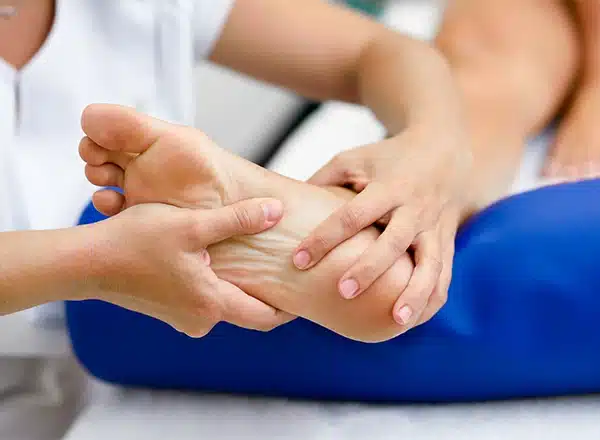
When to See a Podiatrist
If foot or ankle pain has been bothering you for more than a few weeks, home care alone may not be enough. Balance Foot & Ankle offers same-week appointments at our Howell and Bloomfield Hills clinics — no referral needed in most cases. Bring your current shoes and a short list of symptoms and we’ll build you a treatment plan in one visit.
Call Balance Foot & Ankle: (810) 206-1402 · Book online · Offices in Howell & Bloomfield Hills
Frequently Asked Questions About Spring Foot Care
When can I start wearing sandals in Michigan?
Wait until temperatures are consistently above 60°F and ground conditions are dry. When you start, limit sandal time to a few hours and choose sandals with arch support (not flat flip-flops). Gradually increase wearing time over 2-3 weeks to let your feet adapt.
Why does my heel hurt more in spring?
Winter boots provide significant arch support and cushioning. Switching abruptly to flat spring shoes forces the plantar fascia to absorb more force than it has in months, causing inflammation. A gradual footwear transition with orthotic insoles prevents this.
How do I know if my running shoes need replacing?
Most running shoes lose effective cushioning at 300-400 miles. Check the midsole by pressing your thumb into the foam — if it doesn’t bounce back quickly, the cushioning is compromised. Visible outsole wear, asymmetric heel wear, and new aches after runs are also signs.
Can I garden barefoot?
Gardening barefoot risks puncture wounds from hidden objects, fungal exposure from soil organisms, and plantar fasciitis from prolonged standing on hard ground. Wear closed-toe garden shoes with arch support. Patients with diabetes or neuropathy should never garden barefoot.
In-Office Treatment at Balance Foot & Ankle
If home care isn’t resolving your your foot or ankle concern, a visit with a board-certified podiatrist is the fastest path to accurate diagnosis and a personalized plan. At Balance Foot & Ankle Specialists, Dr. Tom Biernacki, Dr. Carl Jay, and Dr. Daria Gutkin offer same-day and next-day appointments at both our Howell and Bloomfield Hills offices. We perform on-site diagnostic ultrasound, digital X-ray, conservative care, advanced regenerative treatments, and minimally invasive surgery when indicated.
Call (810) 206-1402 or request an appointment online. Most insurance plans accepted, including Medicare, Blue Cross Blue Shield, Aetna, Cigna, and United Healthcare.
The Bottom Line
Michigan’s spring transition creates predictable foot problems that are almost entirely preventable. Transition footwear gradually over 2-3 weeks, use orthotic insoles in flat spring shoes, manage moisture to prevent fungal infections, and ease into outdoor activities progressively. At Balance Foot & Ankle, Dr. Tom Biernacki and the team provide same-day spring foot care appointments at our Howell and Bloomfield Hills, Michigan locations.
Dr. Tom’s Seasonal Foot Care Picks
FLAT SOCKS — The barefoot feel without the sweat. Antimicrobial moisture-wicking liner slides into any sandal or loafer. Prevents fungal issues from summer heat and moisture.
PowerStep Pinnacle Insoles — For active summer shoes. Semi-rigid arch support fits most athletic and casual footwear without removing factory insoles.
Disclosure: We earn a commission if you purchase — at no extra cost to you. We only recommend what we use in our clinic.
Start Spring on the Right Foot
Same-day appointments available at our Howell & Bloomfield Hills, MI locations
4.9★ | 1,123 Reviews | 3,000+ Surgeries
Or call: (810) 206-1402
Experiencing persistent foot or ankle pain? Our board-certified podiatrists offer plantar fasciitis treatment with same-week appointments. Call (810) 206-1402 or book online.
Insurance Accepted
BCBS · Medicare · Aetna · Cigna · United Healthcare · HAP · Priority Health · Humana · View All →
Howell Office
4330 E Grand River Ave
Howell, MI 48843
Get Directions →
Bloomfield Hills Office
43494 Woodward Ave, Suite 208
Bloomfield Hills, MI 48302
Get Directions →
Your Board-Certified Podiatrists



Ready to Get Back on Your Feet?
Same-week appointments available at both locations.
Book Your AppointmentMost Common Mistake We See
The most common mistake we see is: Waiting too long before seeking care. Fix: any foot pain lasting more than 4 weeks, or any sudden severe symptom, deserves a professional evaluation rather than more rest.
Warning Signs That Need Same-Day Care
Seek immediate evaluation at Balance Foot & Ankle if you experience any of the following:
- Unable to bear weight
- Severe swelling with skin colour change
- Fever with foot pain (possible infection)
- Diabetes plus any new foot symptom
Call (810) 206-1402 — same-day and next-day appointments at our Howell and Bloomfield Hills offices.
Doctor Hoy’s Natural Pain Relief Gel
Natural topical pain relief I use in our clinic. Arnica + camphor formula — apply directly to the area 3–4x daily. ($20–25)
Shop Doctor Hoy’s →Our podiatrists treat the underlying cause, not just the symptom. Same-week appointments at our Howell and Bloomfield Hills, Michigan offices.

Dr. Tom Biernacki, DPM is a board-certified foot & ankle surgeon (ABFAS & ABPM) at Balance Foot & Ankle Specialists in Southeast Michigan. With over a decade of clinical experience, he specializes in heel pain, bunions, diabetic foot care, sports injuries, and minimally invasive surgery. Dr. Biernacki is a member of the APMA and ACFAS, and his patient education content on MichiganFootDoctors.com and YouTube has made him one of the most-followed foot & ankle educators on YouTube.