Expert Foot & Ankle Treatment from Michigan’s #1 Podiatrist - Balance Foot & Ankle Specialist
Board Certified Podiatrists
Expert Foot & Ankle Care
Expert Foot & Ankle Treatment from Michigan’s #1 Podiatrist - Balance Foot & Ankle Specialist
Expert Foot & Ankle Care
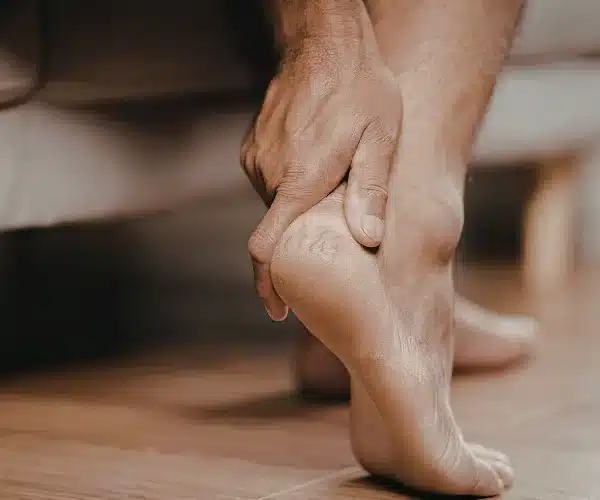
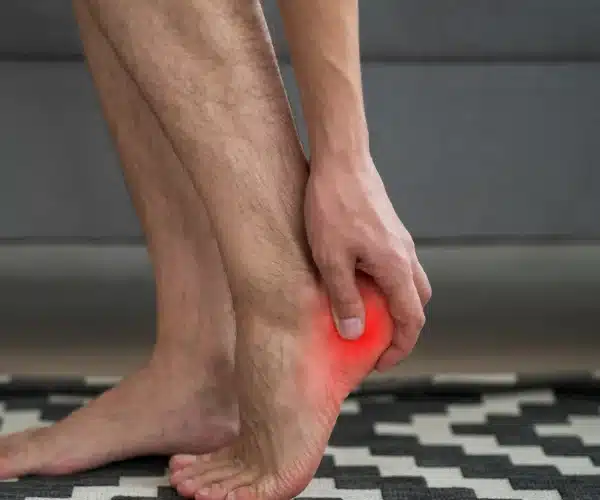
Pain in the ball of your foot can make walking, standing, or exercising uncomfortable and frustrating. Our Michigan podiatrists specialize in diagnosing the cause and providing personalized treatment to relieve pain, prevent long-term damage, and restore comfort.
Ball of the Foot Pain
Ball of foot pain, also known as metatarsalgia, occurs when the front part of your foot experiences excess pressure or inflammation. Common contributing factors include:
Symptoms may include sharp, aching, or burning pain in the forefoot, numbness, tingling, or a feeling of walking on pebbles.
Ball of foot pain, also known as metatarsalgia, can result from several common factors:
A podiatric evaluation is the best way to identify the exact cause and rule out serious issues.
Most cases of ball of foot pain are managed conservatively with:
Surgery is considered when conservative measures fail to relieve pain or if structural problems require correction. Common procedures include:
All procedures are performed safely in-office or at an accredited surgical facility by our board-certified podiatrists.
Recovery depends on the treatment method:
Our Michigan podiatry team guides you through every step, from diagnosis to long-term relief, ensuring a safe and effective recovery.
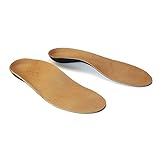
If you’re dealing with ball of foot pain, the right support can make all the difference. At Balance Foot & Ankle Specialist, we recommend custom orthotics and supportive footwear to reduce pressure, improve alignment, and protect your forefoot.
Our podiatrists in Michigan evaluate your gait, foot structure, and activity level to design personalized orthotics that work with your lifestyle. Pairing them with proper shoes maximizes relief and supports healthy foot function.


There are numerous causes of the ball of foot pain:

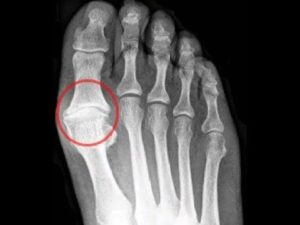
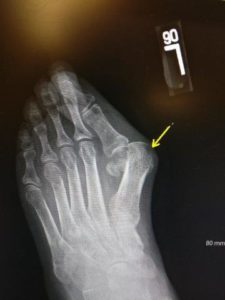
Big toe joint arthritis may cause ball of the foot pain. This is the 1st metatarsal phalangeal joint with end-stage arthritis.
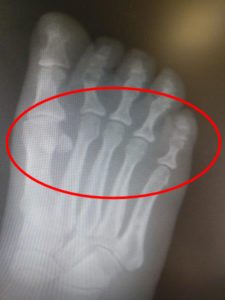
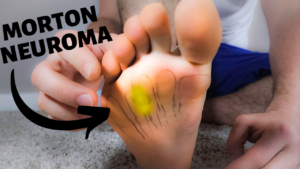
This is Morton’s neuroma. It is most common in between the 3rd and the 4th metatarsals.
Capsulitis of the Second Toe Taping: Plantar Plate Tear Treatment 2020
Metatarsalgia or ball of the foot pain is the pain in the front of the foot.
This is most common in people who have very tight hamstrings; calf muscles are putting much more pressure on the ball the foot. This can lead to neuroma, metatarsal, or even stress fracture pain.
Corns and calluses are the most common over the ball of the foot and between the toes. Acorn is essentially a plugged sweat gland that goes deep down like a spike, whereas a callus is a flat buildup of hard skin in a pressure area of the foot. Both are similar, and corn is more narrow and spiky underneath.
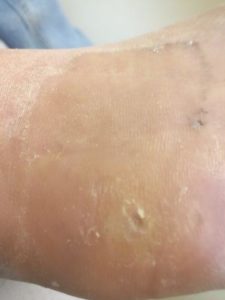
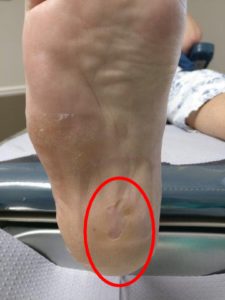
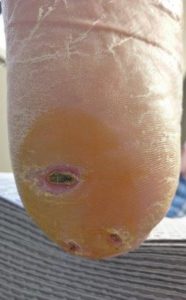
This stone bruise on the bottom of the ball of the foot caused a blister and the wound.
As you get older, you have a lot less fat pad on the ball of your foot in your heel. This can cause you to blister and bruise underneath.
It is important to keep pressure off this site, especially as you begin to lose sensation in the bottom of your foot.
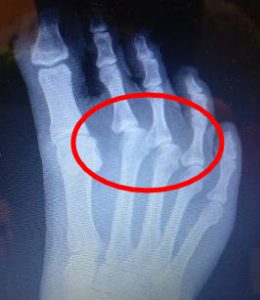
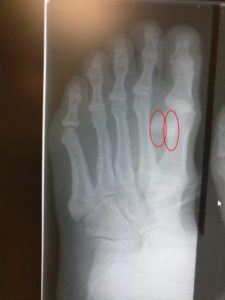
This is an example of a plantar plate rupture of the second, third toes. This started as second toe capsulitis and plantar plate pain, but eventually, it led to a full plantar plate rupture. This can cause hammertoes, toe dislocation, and crossover toes. If these toes were stabilized with taping, this could have prevented this dislocation.
This is heloma durum, and this is another name for a hard corn.
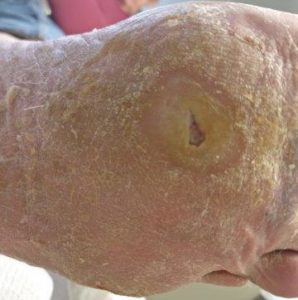
Hard skin can develop in pressure areas of the foot. This can lead to an ulcer with cracks and fissures.
The stone bruise on the heel can take about 5 to 7 days for the initial bruising to go away.
If you really bruise the bone underneath, it can take even up to 6 to 8 weeks. You will feel a lot better quicker if you wear good orthotics and good shoes.
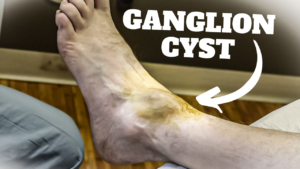
A hard cyst can develop in the foot and ankle. This is most commonly non-dangerous fluid called a ganglion cyst.
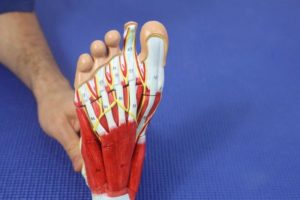
A plantar fibroma can form anywhere along with the structures the bottom of the foot here. There is a layer of tissue called the plantar fascia, with muscles underneath it.
We like to think of a plantar fibroma, almost like pair with scar tissue throughout the plantar fascia. The more you keep walking on it, the more swollen and agitated it gets. It fills up with more fluid and causes more pain.
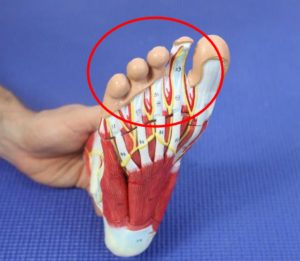
Middle toe pain can be caused by hammertoes, plantar plate tears, capsulitis, Mortons neuroma pain, stress fractures, and metatarsalgia.
So, click on the photo gallery to see the specific causes of your ball of the foot pain!
The most common causes of pain in the ball of the foot under the big toe are:


Ball of the Foot Pain
Patients throughout Michigan trust Balance Foot & Ankle Specialist because we combine advanced podiatric care with a compassionate, patient-focused approach.
Our doctors are highly trained in diagnosing and treating complex foot conditions, from everyday pain to advanced surgical needs.
Our board-certified podiatrists specialize in foot and ankle care.
Is a board-certified foot and ankle specialist with extensive experience in treating conditions such as ball of foot pain, bunions, nerve disorders, and sports-related injuries.
Specializes in both conservative and surgical treatments for a wide range of foot and ankle conditions.
Provides comprehensive foot and ankle care with a focus on nail conditions, sports injuries, and diabetic foot health.
That’s a really common — and understandably scary — question. Toenails usually turn black and fall off because something is damaging the nail or the tissue underneath it. Here are the most likely reasons, from most common to more serious.
Toenails usually turn black and fall off because the nail or the tissue underneath it has been damaged. The discoloration is often a sign of bleeding, pressure, infection, or poor blood flow. Here are the most common causes, explained simply.
Toenails usually turn black and fall off because something damages the nail or the tissue underneath it. The dark color is often trapped blood, infection, or loss of blood supply. Here are the most common reasons.
Ball of foot pain can make walking, standing, and daily activities uncomfortable. Get professional evaluation and relief from Michigan’s trusted podiatry specialists. relief.
Caregiver appointments welcome. Same-week appointments may be available.
Dr. Tom Biernacki, DPM is a board-qualified podiatrist and foot & ankle surgeon serving Southeast Michigan at Balance Foot & Ankle Specialists. A Michigan native, Dr. Biernacki earned his undergraduate degree from Michigan State University and his Doctor of Podiatric Medicine (DPM) from Kent State University College of Podiatric Medicine. He completed a three-year comprehensive surgical residency in foot and ankle surgery in the Detroit metro area.
Dr. Biernacki specializes in the treatment of heel pain, bunions, hammertoes, diabetic foot care, sports injuries, flatfoot correction, and minimally invasive foot surgery. He is dedicated to providing evidence-based, patient-centered care that helps people of all ages stay active and pain-free.
He sees patients at multiple convenient Metro Detroit locations and is committed to community education through the MichiganFootDoctors.com resource library. Dr. Biernacki is a member of the American Podiatric Medical Association (APMA) and the Michigan Podiatric Medical Association (MPMA).
Choose Your Location
✅ Same-day appointments available · No referral needed
🔒 Your information is private and HIPAA-protected